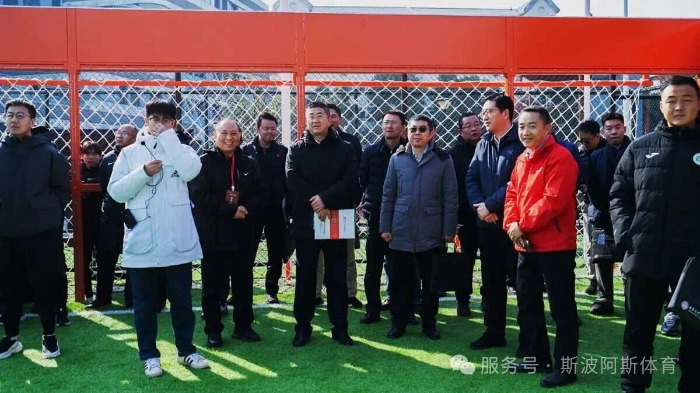
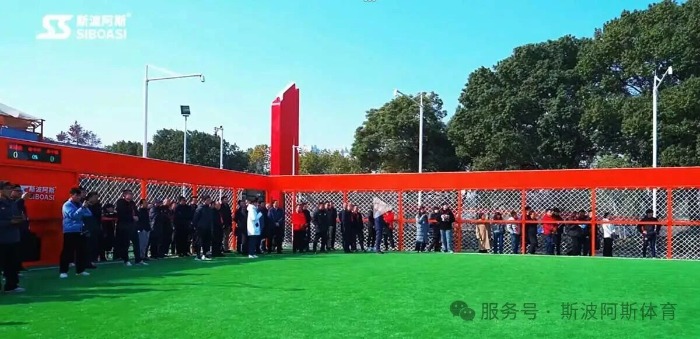
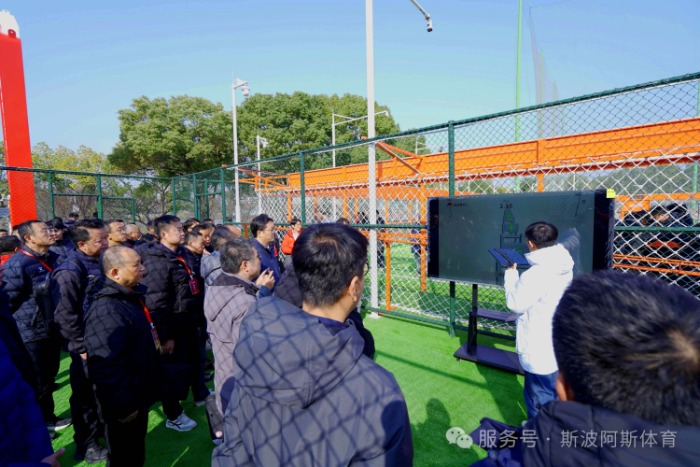
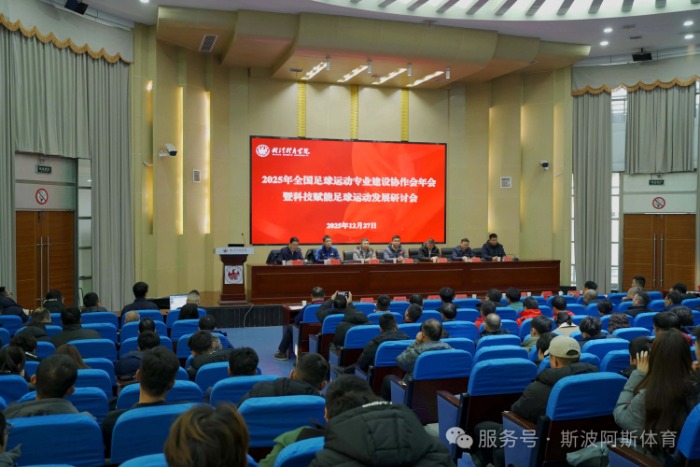
On December 27, 2025, at Wuhan Sports University, officials from the General Administration of Sport of China and the Chinese Football Association gathered with experts and scholars from more than 50 universities and research institutions to witness the formal launch of a new system: the Siboasi Football 5.0 Training System. It is described as an "internationally leading, domestically unique" football performance analysis system, and as the first intelligent training system in China to be deployed on a national-level professional platform.
To outsiders, it may look like a routine handover between a university and a company. For football training methodology, it points to something else: for the first time, training has a chance to shift from the coach's experience to factual data.
What It Is: Not a Set of Ball Machines, but a Six-Part Closed Loop
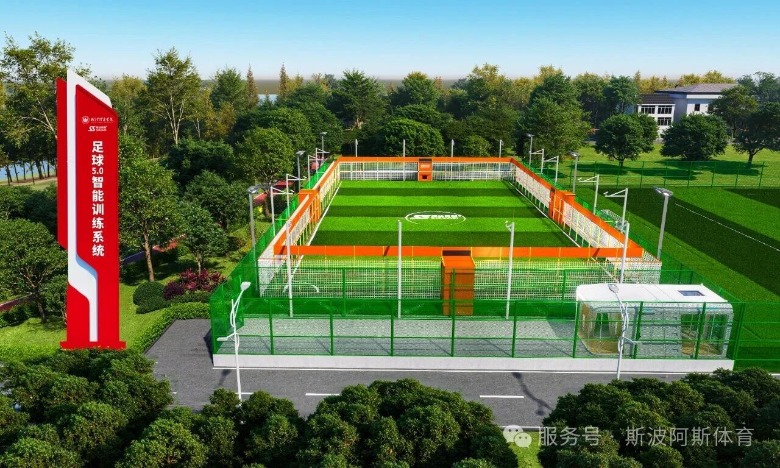
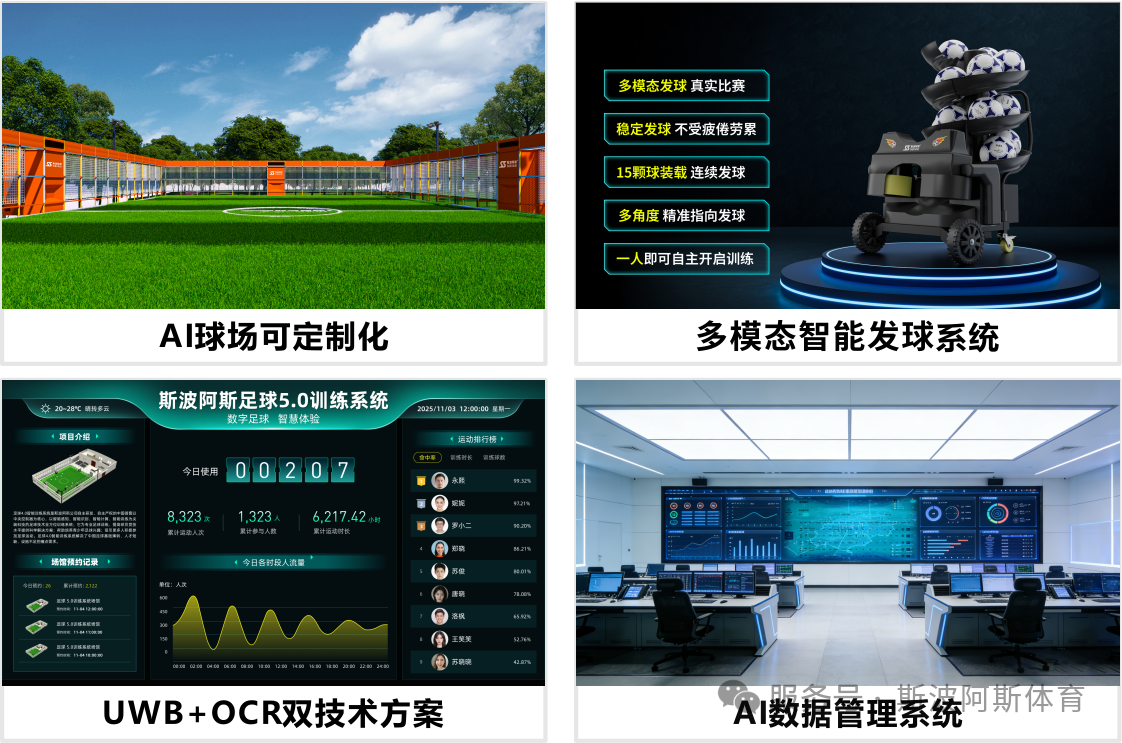
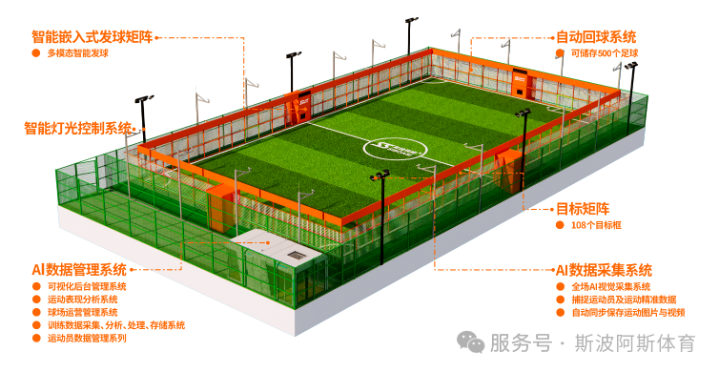
According to information disclosed at the launch, the Siboasi Football 5.0 Training System is made up of six core modules working together: an AI data collection system, an AI data management system, an intelligent ball-delivery matrix, a target-frame matrix, an automatic ball-return system and an intelligent lighting control system.
The names alone can understate the system's complexity. Taken apart, the logic is clear:
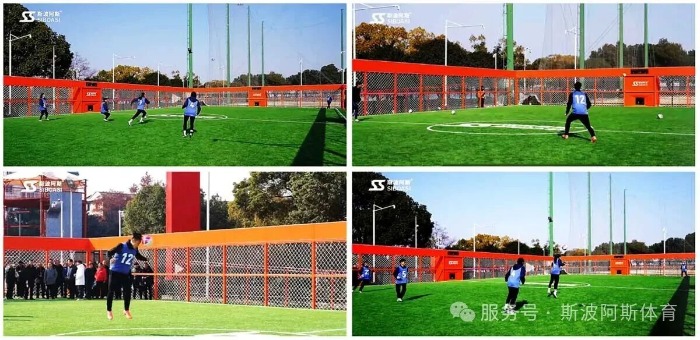
- The intelligent embedded ball-delivery matrix sets the questions. It delivers balls in multiple modes, producing combinations of ground balls, spinning balls and curved balls that closely recreate real match situations.
- The target matrix sets the standard. With 108 target frames on site, "was the pass accurate?" changes from a feeling into a scoreable target.
- The automatic ball-return system provides endurance. It can store 500 footballs, so training is not interrupted by ball collection.
- The intelligent lighting control system controls the session. Light signals guide training rhythm and reaction judgment.
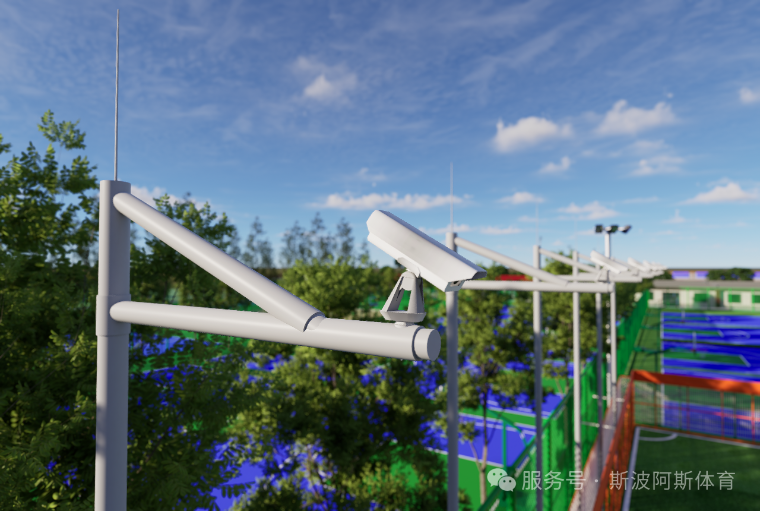
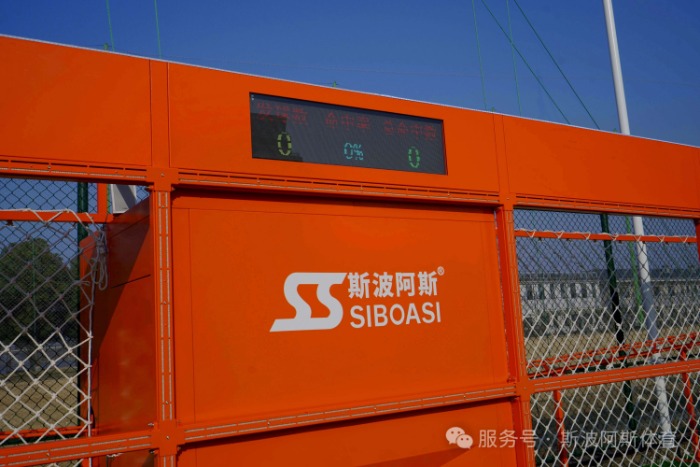
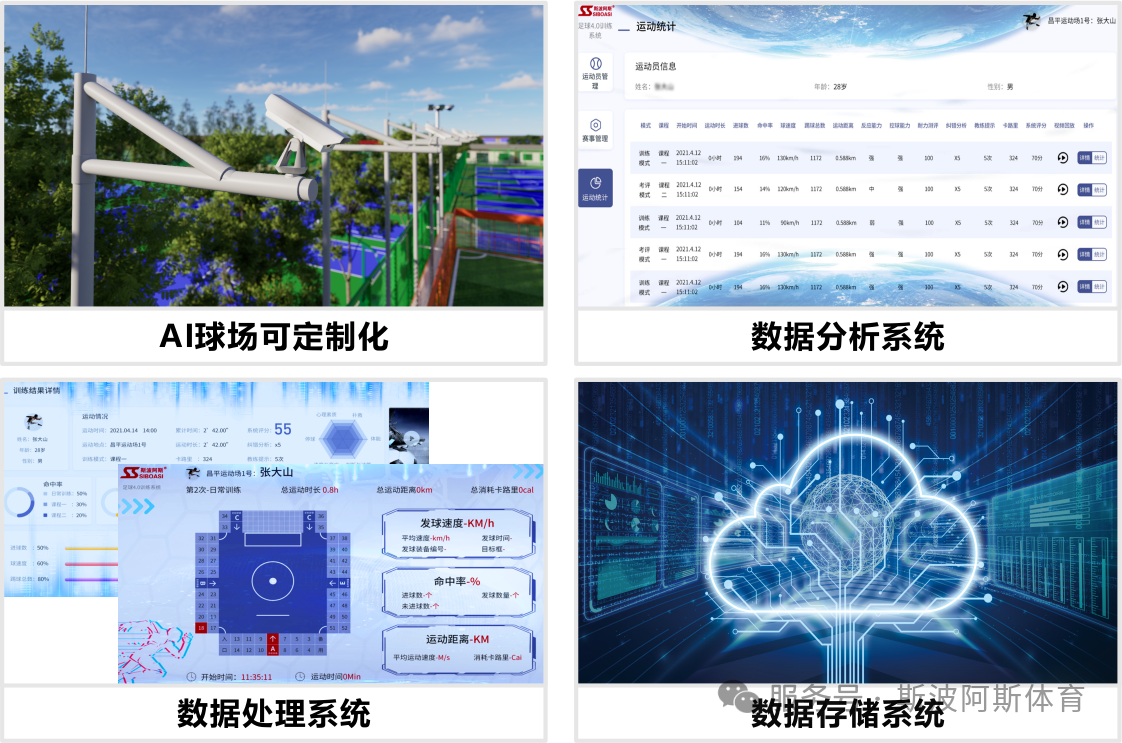
- The AI data collection system does the seeing. Its 36 visual collection points combine UWB and OCR technology to capture target areas in real scenes with millisecond-level precision, record athlete and movement trajectory data, and automatically save images and video.
- The AI data management system does the calculating. It provides a visual back end, performance analysis, venue operations management and athlete data management, covering the full chain of collection, analysis, processing and storage.
The six modules are not a parallel list of features but a closed chain: ball delivery, ball contact, hit judgment, data collection, modeling and analysis, then feedback into the next round of training. This is the essential difference between the system and most single-point devices on the market.
Technical Edge: Replacing the Coach's Eyes With Sensors Across the Whole Pitch
Four dimensions help judge how advanced a training system is: space, ball delivery, time and computing power. Siboasi Football 5.0 gives a clear answer on each.
Space: 36 collection points with UWB and OCR fusion. In traditional training, a coach can watch only three to five players at a time, and everything outside the line of sight is lost. The 36 visual collection points create observation with no blind spots across the field. UWB handles position and trajectory, while OCR handles recognition and judgment of target areas. Combined, they support the millisecond-level precision figure.
Ball delivery: multiple modes and more than 10,000 training modes. This may be the most important point. With the same type of ball delivery, a coach's landing spot can vary by half a meter depending on whether they are in good or poor form. A machine delivers constant quality. With more than 10,000 training modes that can be flexibly recombined and programmed, everything from the basic foot feel of an U8 player to match-like contests at professional level can be reproduced on the same hardware.
Time: a long-term athlete database. The system continuously records each athlete's growth trajectory, physical condition, specialist skills, match performance and even injuries. The value of this is badly underestimated. The biggest loss in football training is not talent but the inability to see progress, which leads players to quit. When a 12-year-old can see three years of data curves, the motivation structure of training changes.
Computing power: Huawei Ascend analysis processors. Stored data is not useful until it is analyzed in real time and turned into evaluation reports automatically. Using Ascend as the analysis processor is essentially preparation for high-frequency, continuous, multi-channel video use in commercial settings, rather than a one-off demonstration.
The summary offered at the launch is precise: the training process should be "visible, calculable, comparable and traceable." These four qualities correspond to the four blind spots that experience-based training has found hardest to overcome.
Why "Unique in China" Holds Up
Claims of being "the only" one deserve caution. Still, the rarity of this system can be explained on three levels.
First, it is deployed, not just displayed. China does not lack football technology products. What it lacks is a complete system that has entered a national-level professional platform and the daily training routine of an institution. A prototype in a laboratory and a productivity tool used without time limits every day are two different things. By choosing to build jointly with Wuhan Sports University, Siboasi has placed itself in the most demanding usage environment to be tested.
Second, it is a closed loop, not an assembly. Current market solutions fall roughly into three types: those selling ball-delivery equipment, those selling tracking cameras and those selling analysis software. Each solves one segment, but the data breaks at the interfaces. Siboasi Football 5.0 builds all six modules into one system. The collection end knows what the analysis end needs, and the analysis end knows what the training end lacks. This consistency is hard for single-point products to achieve through integration.
Third, it is customizable, not a standardized kit. Siboasi and the Wuhan Sports University R&D team stated that the system can be customized for different use cases and training goals, serving the varied needs of developing match-ready and competitive players. That means it can serve universities, professional club academies and even regional youth training centers.
Taken together, "internationally leading, domestically unique" is more than a launch-event slogan.
Observations: Three Long-Standing Problems It Aims to Solve
Setting parameters aside, the system's significance for the industry centers on three long-standing problems.
First, confusing "how much was trained" with "how well it was trained." Football training has traditionally been measured in time: how many sessions a week, how many hours a session. But time is input, not output. With 108 target frames, 36 collection points and multi-mode ball delivery, the unit of measurement shifts from hours to hit rate, reaction time and movement quality, an upgrade at the level of methodology. The system applies high-frequency repetition to key abilities such as endurance, speed and strength, and agility and reaction, helping players build stable movement memory and muscle memory. Whether that memory has formed can now be verified.
Second, the subjectivity of talent selection. Selection has long relied heavily on the personal judgment of scouts and coaches. That is not wrong in itself, but it cannot scale and cannot be re-checked. The long-term database built by the system gives training institutions a traceable basis in data. At the launch, Dean Wang Yuntao also said the system's core value lies in systematically developing high-quality, match-ready football players and in providing reliable data for talent selection.
Third, the ceiling on coaching capacity. The automatic ball-return system stores 500 footballs, so training is not interrupted by retrieving balls. The intelligent lighting and ball-delivery matrix take over organizing drills and feeding balls, and the system supports multi-player collaborative training. Coaches are freed from repetitive work to do what only people can do: correct errors, motivate players and make decisions in the moment.
A sober note is also needed: technology is never a cure-all. A system can provide a high-quality training environment and objective feedback, but player development still depends on how coaches use the data and whether clubs are willing to be patient for the long term. Systems that are installed and then treated as advanced ball machines are not rare in sports technology. The real test for Siboasi Football 5.0 comes not on the day of delivery but on the 300th day after it.
Backing From Both Experts and the Company
A senior professor at the School of Football, Wuhan Sports University, pointed to the system as a whole. By continuously collecting and analyzing each athlete's growth trajectory, physical condition, specialist skills, match performance and injuries, it enables differentiated, targeted and scientific training. The professor also noted that after high-frequency training, athletes' observation, anticipation and decision-making, as well as ball feel and match ability, improve markedly.
Cai Xiangyang, chief expert for international cooperative education at the School of Physical Education and Sports Science, Fujian Normal University, and a member of the Campus Football Committee of the Ministry of Education, focused on adoption. He said the Siboasi Football 5.0 Training System has important value for wider rollout, should be integrated more deeply into football teaching and training, and is an important support for making training more scientific.
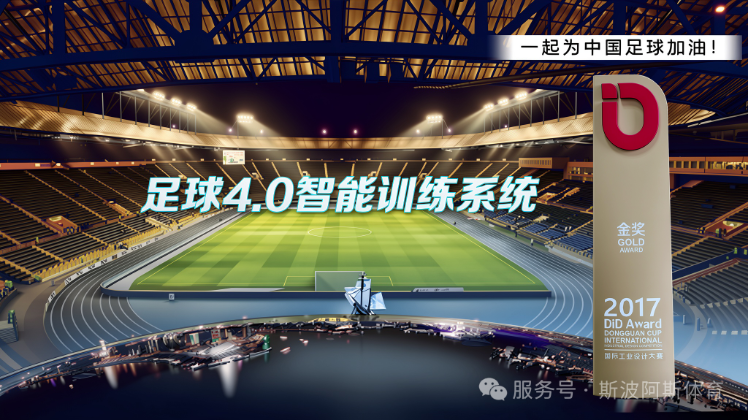
The company behind the system also matters. Siboasi was founded in 2006, and its business covers six segments: intelligent ball-sports equipment, AI digital sports parks, AI campus sports education, smart home sports, shared sports equipment and the Xinglian (Star Chain) big data platform. Its products are sold in more than 150 countries and regions. After two decades of accumulation, several of its invention patents and original technologies have filled gaps in the global industry. As early as 2017, Siboasi's Football 4.0 system, a first in the industry, won a gold award at an international industrial design competition, making it one of the most innovative and advanced examples in China and the world.
Closing
The real value of the Siboasi Football 5.0 Training System at Wuhan Sports University is that it turns training into an asset that can be recorded, compared and reviewed. When every touch a player makes leaves a trace, and every judgment a coach makes has evidence behind it, the scientific, data-driven era of football training will have truly arrived.



 Español
 عربى