How Ball Delivery Consistency Influences Technical Development
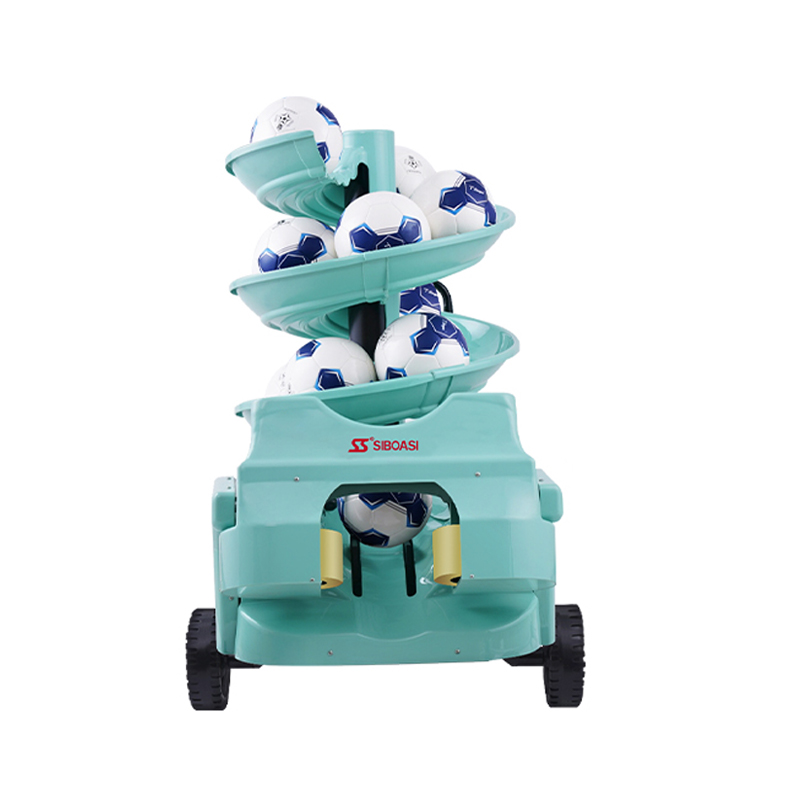
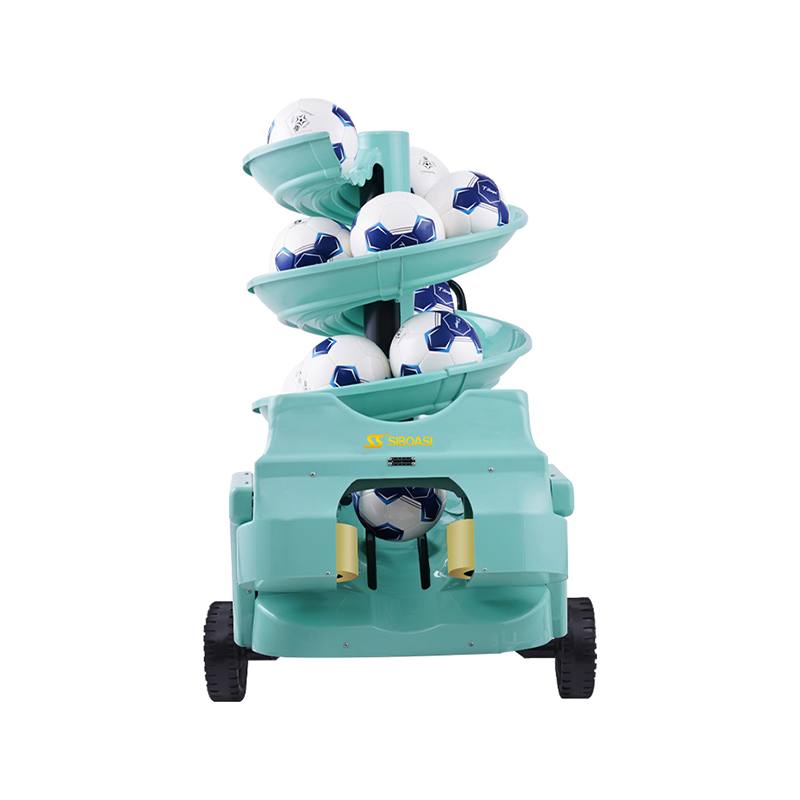
One of the most overlooked factors in football training is repetition quality rather than repetition quantity. When every pass or cross arrives with different speed, spin, or direction, players naturally spend more time adapting than refining technique. A football serving machine minimizes these variables, allowing athletes to focus on first touch, body positioning, finishing mechanics, or receiving angles under repeatable conditions.
Consistent ball delivery creates measurable technical improvement because every repetition is comparable to the previous one. This makes it much easier for coaches to identify whether performance changes result from the player's technique instead of inconsistent service.
- Improves first-touch consistency under identical conditions.
- Allows shooting mechanics to be refined without unpredictable feeds.
- Produces objective training data over multiple sessions.
- Reduces unnecessary downtime caused by manual ball preparation.
We continually optimize our football serving machine to deliver repeatable trajectories, because precision is what transforms ordinary repetitions into effective training.
Choosing Ball Speed for Different Player Development Stages
Faster is not always better. Matching launch speed to player ability creates a more productive learning environment while reducing poor habits caused by excessive pressure.
| Player Level |
Recommended Ball Speed |
Training Focus |
| Youth Beginners |
Low |
Ball control and confidence |
| Intermediate Players |
Medium |
Receiving under pressure |
| Competitive Teams |
Medium to High |
Decision making and finishing |
| Professional Training |
High |
Game-speed execution |
Recommended serving speeds for different football training objectives.
Progressive speed adjustment enables players to build correct technique before introducing higher game intensity. A soccer ball serving machine with a wide speed range provides greater flexibility for clubs that train athletes of different ages.
Why Adjustable Launch Angles Matter More Than Maximum Speed
While maximum launch speed often attracts attention, experienced coaches frequently prioritize launch angle because it determines which match situations can be recreated. An adjustable football serving machine can simulate wide crosses, driven passes, lofted balls, defensive clearances, and attacking through balls without requiring additional equipment.
Training Situations Created by Different Angles
- Low angles for quick combination play.
- Medium angles for driven crosses and finishing.
- High angles for aerial control and heading practice.
- Variable angles for transition and counterattack drills.
A wider launch-angle range significantly increases training variety without increasing coaching workload.
Continuous Feeding or Interval Feeding: Which Delivers Better Results?
Both feeding modes serve different tactical purposes rather than competing with each other. Selecting the proper rhythm helps balance technical accuracy with physical conditioning.
| Mode |
Best Application |
Primary Benefit |
| Continuous |
High-intensity finishing drills |
Improves endurance and reaction speed |
| Interval |
Technical instruction |
Allows coaching feedback between repetitions |
Selecting the appropriate feeding rhythm based on training objectives.
We design our soccer ball serving machine with quick switching between feeding modes, enabling coaches to transition efficiently from technical practice to match-intensity exercises during the same session.
What Buyers Should Evaluate Beyond Technical Specifications
Many purchasing decisions focus only on launch speed or ball capacity. However, long-term ownership costs are influenced by several practical factors that directly affect everyday operation.
Important Evaluation Points
- Mobility across natural grass and artificial turf.
- Trajectory consistency after extended operation.
- Ease of daily maintenance and cleaning.
- Availability of programmable training sequences.
- Structural durability for outdoor environments.
A reliable football serving machine should deliver stable performance over thousands of repetitions rather than simply achieving impressive peak specifications.
How Intelligent Programming Supports Tactical Training
Advanced programmable ball delivery has become increasingly valuable for clubs seeking to replicate real match situations. Instead of repeating identical feeds, coaches can create sequences combining different launch speeds, angles, and intervals, forcing players to read each ball before reacting.
Randomized serving patterns better simulate match uncertainty than repetitive drills. This helps develop scanning ability, anticipation, spatial awareness, and rapid decision making under pressure.
- Alternating near-post and far-post crossing drills.
- Mixed aerial and ground-ball receiving exercises.
- Transition drills combining defensive clearance and immediate attack.
- Position-specific routines for forwards, midfielders, defenders, and goalkeepers.
We continue refining intelligent programming functions so coaches can spend less time preparing equipment and more time improving player performance.



 Español
 عربى
عربى
 +86 13113306076