How Ball Speed and Feed Frequency Influence Real Match Performance
Many buyers focus on maximum launch speed, but experienced coaches often evaluate how precisely a machine combines ball speed with feed frequency. The ideal training session challenges movement, timing, and recovery simultaneously instead of simply producing the fastest possible shots.
For technical drills, slower feeds with longer intervals allow players to refine swing mechanics and foot positioning. As consistency improves, increasing launch frequency creates pressure similar to competitive rallies, forcing faster decision-making while maintaining shot quality. Progressive adjustment produces more sustainable improvement than training at maximum difficulty from the beginning.
- Slow speed + long interval: stroke correction and beginner development.
- Medium speed + medium interval: movement rhythm and shot consistency.
- High speed + short interval: pressure handling, recovery, and endurance.
- Variable speed: anticipation and tactical adaptability.
We believe intelligent adjustment options give players greater flexibility to create training sessions that evolve alongside their skills rather than remaining fixed at one difficulty level.
Why Programmable Ball Sequences Matter More Than Random Feeding
Advanced squash practice depends on repeatable training patterns. Instead of receiving unpredictable feeds, players often benefit from programmable sequences that recreate specific tactical situations repeatedly until the desired movement becomes automatic.
| Training Objective |
Recommended Sequence |
Expected Benefit |
| Corner recovery |
Alternating front and back corners |
Improved court coverage |
| Backhand stability |
Continuous backhand feeds |
Consistent stroke quality |
| Transition drills |
Short-long-short combinations |
Faster tactical adaptation |
| Match simulation |
Mixed speed and angle patterns |
Decision-making under pressure |
Examples of programmable feeding sequences for different squash training objectives.
Repeatable training patterns also make player progress easier to measure, since the same sequence can be performed over multiple sessions while comparing consistency, movement efficiency, and accuracy.
Mechanical Stability Is Often More Valuable Than Peak Specifications
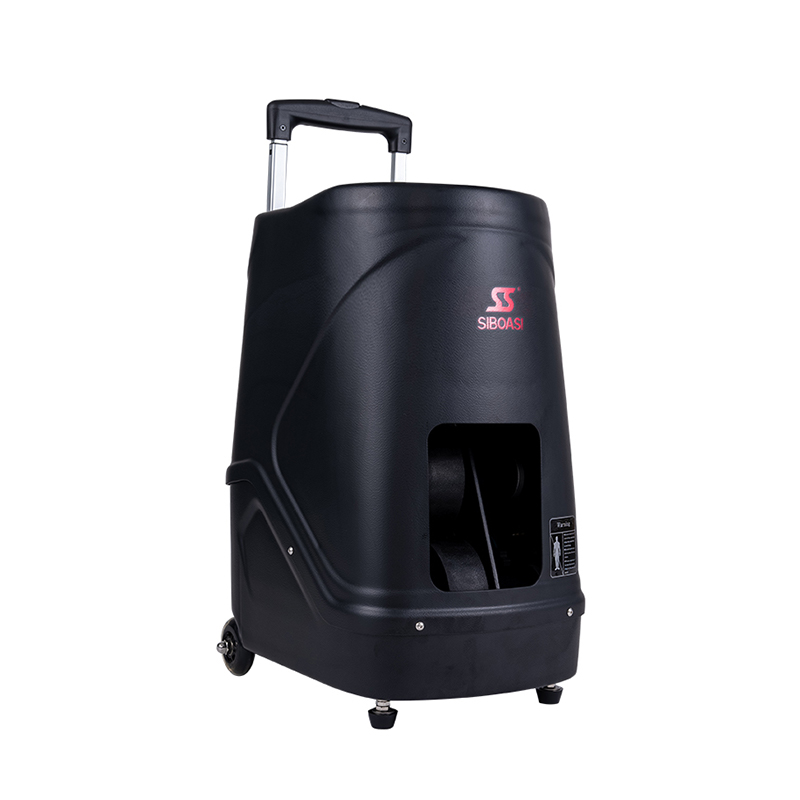
When evaluating an intelligent squash ball serving machine, consistent launch accuracy should receive greater attention than the highest advertised speed. Even small variations in launch angle can significantly affect footwork timing during repetitive drills.
What contributes to stable feeding?
- Precision mechanical alignment.
- Reliable motor speed control.
- Consistent ball feeding mechanism.
- Stable electronic control system.
These factors work together to minimize unnecessary variation so players can identify technical mistakes originating from their own movement rather than inconsistent equipment. We continuously focus on this aspect because stable repetition is one of the foundations of productive practice.
Choosing Features Based on Training Environment Instead of Player Level Alone
Purchasing decisions are frequently based only on whether the intelligent squash ball serving machine is intended for beginners or professionals. In practice, the training environment often has a greater influence on the required configuration.
| Training Environment |
Recommended Priority |
| Personal home court |
Easy operation, flexible programming, portability |
| Commercial club |
Durability, continuous operation, quick adjustment |
| Professional academy |
Extensive programmable drills and precise angle control |
| Team training |
Rapid parameter switching and long operating time |
Matching machine capabilities with different squash training environments.
Selecting features according to usage frequency and coaching requirements usually delivers better long-term value than purchasing solely according to player experience.
Using Variable Angles to Develop Better Court Awareness
Fixed-direction practice improves stroke repetition, but varying launch angles develops movement efficiency and tactical awareness. Players who regularly experience changing trajectories become more comfortable adjusting their positioning before making contact with the ball.
Useful angle combinations
- Wide forehand to deep backhand transitions.
- High defensive shots followed by low attacking balls.
- Alternating front court and rear court placement.
- Randomized left-right directional changes.
Rather than repeating identical movements, these combinations encourage quicker visual recognition and more efficient court positioning. We design intelligent control functions with the goal of making these transitions simple to configure while supporting a wide variety of personalized practice routines.
Maintenance Practices That Help Preserve Feeding Accuracy
Long-term performance depends not only on manufacturing quality but also on regular maintenance. Even professional equipment benefits from routine inspection after intensive training cycles.
- Keep the feeding channel clean to reduce unnecessary friction.
- Inspect moving components periodically for wear.
- Use squash balls with consistent condition during technical drills.
- Store the machine in a clean, dry environment when not in use.
Preventive maintenance typically extends service life while maintaining stable launch consistency over thousands of training cycles. Buyers planning frequent daily operation should consider maintenance accessibility as an important purchasing factor alongside performance specifications.



 Español
 عربى
عربى
 +86 13113306076