How Different Ball Frequencies Influence Volleyball Skill Development
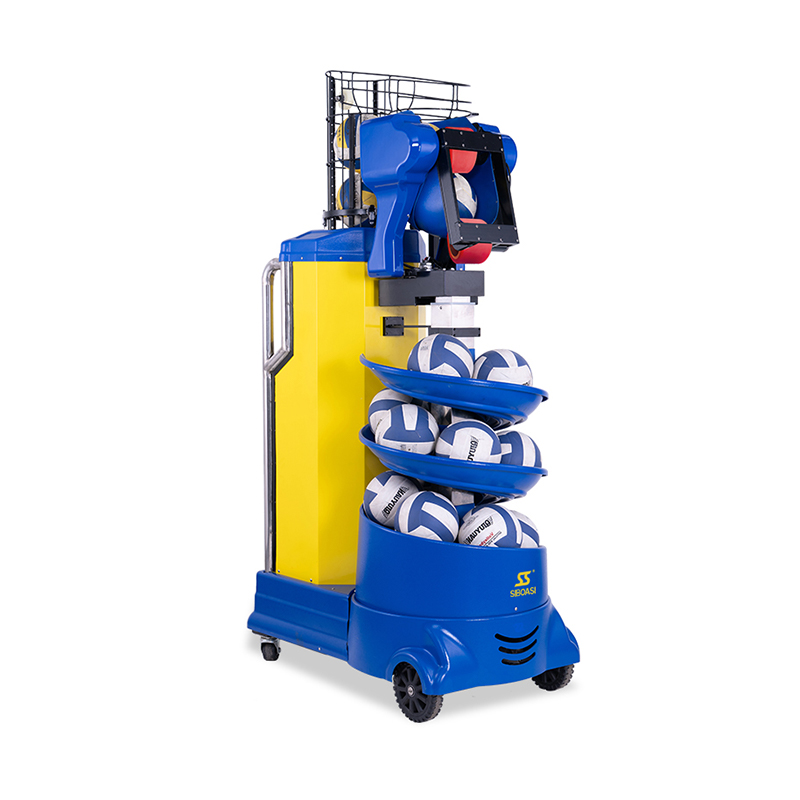
Training frequency is often overlooked when configuring a Volleyball Training Equipment. While serving speed attracts the most attention, the interval between each ball directly affects reaction training, recovery time, and technical consistency. Matching ball frequency to the objective of the session produces more efficient skill development than simply increasing speed.
| Training Goal |
Recommended Interval |
Primary Benefit |
| Technique correction |
5-8 seconds |
Allows immediate coaching feedback |
| Reaction drills |
2-4 seconds |
Improves decision-making speed |
| Endurance training |
1-2 seconds |
Builds consistency under fatigue |
Ball interval selection should match the intended training objective rather than remain fixed.
We always encourage coaches to adjust serving intervals together with speed and trajectory, because realistic match rhythm is created by the combination of all three variables instead of any single setting.
Why Multi-Angle Serving Creates Better Defensive Habits
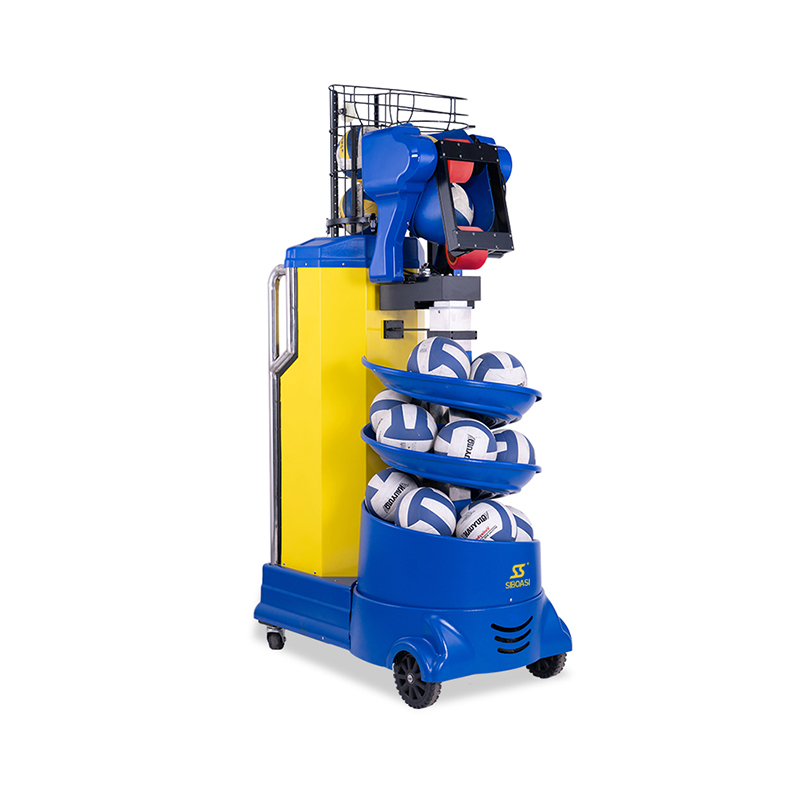
Defensive performance depends heavily on reading the ball early. Repeating serves from only one direction eventually causes players to anticipate patterns rather than react naturally. Intelligent volleyball serving machines capable of adjusting horizontal and vertical angles help recreate unpredictable game situations.
- Alternate front-row and back-row trajectories to improve court coverage.
- Mix high and low contact points to strengthen reading ability.
- Randomize left and right placements to reduce movement prediction.
- Combine multiple trajectories within one training cycle for realistic defensive transitions.
Players improve faster when every incoming ball requires a fresh decision instead of a repeated movement pattern.
What Buyers Should Evaluate Beyond Maximum Serving Speed
High serving speed is valuable, but purchasing decisions should also consider repeatability, trajectory accuracy, stability, and programming flexibility. These characteristics have a greater impact on daily training quality over years of use.
| Evaluation Factor |
Why It Matters |
| Speed consistency |
Creates repeatable technical practice |
| Directional precision |
Supports tactical positioning drills |
| Programmable sequences |
Simulates realistic match scenarios |
| Mechanical stability |
Maintains accuracy during intensive sessions |
Long-term training value depends on several technical factors working together.
We have found that many professional coaches prioritize reliable repetition over headline speed because consistent ball delivery simplifies performance analysis and technical correction.
How Programmable Training Sequences Improve Tactical Practice
Random practice develops adaptability more effectively than repetitive drills. Machines capable of storing customized serving sequences allow coaches to simulate serve-receive rotations, defensive transitions, and attack preparation without manually changing machine settings after every ball.
Typical sequence examples
- Short serve followed by deep serve.
- Alternating left and right attack zones.
- Mixed high and fast trajectories.
- Variable serving intervals to imitate match tempo.
Custom sequences reduce predictability and encourage players to process each ball independently, closely reflecting competitive play.
Practical Maintenance Habits That Extend Equipment Service Life
Even professional volleyball shooting equipment benefits from routine preventive maintenance. Regular inspection minimizes unexpected downtime and helps preserve serving accuracy throughout years of intensive use.
- Clean feeding wheels and contact surfaces after high-volume sessions.
- Check fasteners periodically to maintain structural stability.
- Store equipment in a dry indoor environment when not in use.
- Inspect power connections before every training session.
We design our equipment for demanding daily training, yet regular maintenance remains one of the simplest ways to protect long-term performance and accuracy.
Choosing Equipment According to Training Environment Instead of Player Level
Buyers often compare machines according to athlete level alone, but the training environment deserves equal consideration. School teams, professional clubs, academies, and national training centers all have different operational demands.
| Training Environment |
Preferred Machine Features |
| School programs |
Simple controls and broad speed adjustment |
| Volleyball academies |
Programmable drills with multi-angle serving |
| Professional clubs |
High durability and tactical simulation |
| National training centers |
Advanced customization and intensive operation capability |
Selecting equipment according to actual training scenarios maximizes long-term value.
The best investment is not necessarily the most powerful machine, but the one that consistently supports your daily coaching objectives and future training plans.


 Español
 عربى
عربى
 +86 13113306076