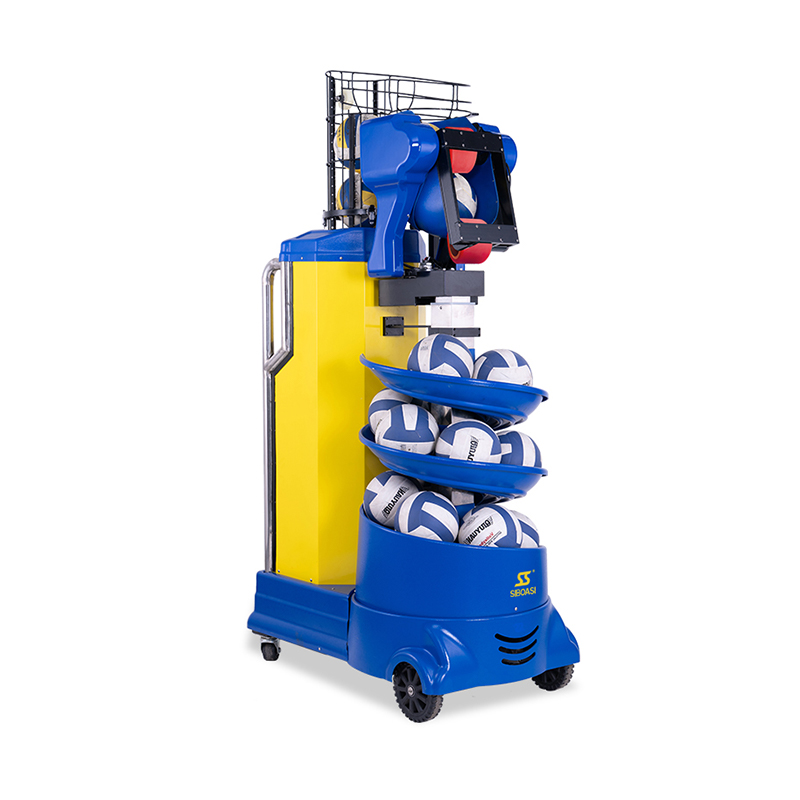
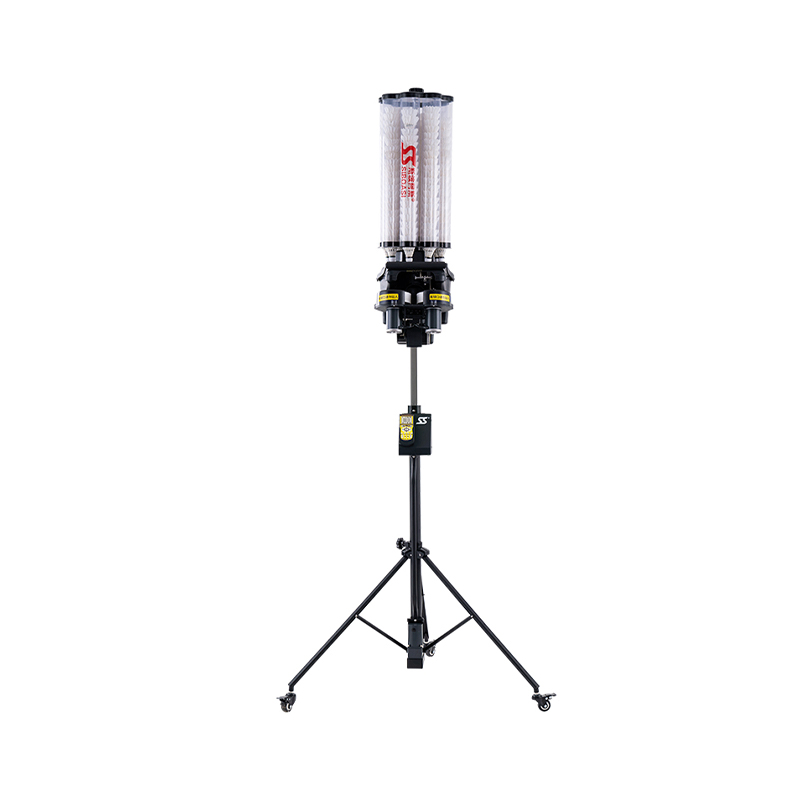
Volleyball training has traditionally relied on coaches or teammates to feed balls by hand, a method that limits consistency and consumes valuable coaching time. Intelligent volleyball serving machines address this gap by delivering repeatable, adjustable, and match-realistic serves that support players at every skill level. This article examines how these machines function, what technical features matter most, and how training institutions can select and use them effectively.
Why Manual Feeding Falls Short in Modern Training
Manual ball feeding depends heavily on the stamina and accuracy of the person delivering the ball. Over a long training session, feed quality naturally declines, introducing inconsistency into drills that are meant to build muscle memory. Coaches feeding balls by hand also lose the opportunity to observe and correct technique in real time, since their attention is split between delivery and coaching. An intelligent serving machine removes this bottleneck by producing a steady, programmable stream of serves, freeing coaching staff to focus entirely on player form, positioning, and tactical awareness.
Core Technical Parameters That Define Training Value
Not all serving machines offer the same depth of control. The following parameters determine whether a machine can support a full range of training scenarios, from youth fundamentals to elite-level tactical drills.
Adjustable Serving Speed
Speed range is one of the most important specifications to evaluate. A wide adjustable range allows the same unit to serve slower, arcing balls for beginners learning passing fundamentals, then scale up to high-velocity serves that replicate competitive match pace. This flexibility means a single machine can support an entire club, from youth programs to senior teams, without requiring separate equipment for each skill level.
Precision Height Control
Height control determines whether the machine can simulate a floating serve, a topspin jump serve, or a set pass at net height. Precise height adjustment lets coaches design drills targeting specific skills, such as forearm passing on low trajectories or overhead attacking on higher ones, without needing to reposition the machine constantly.
Multi-Angle Directional Adjustment
Court coverage matters as much as speed and height. Machines capable of adjusting serve direction across front row, back row, and both sidelines allow players to train against a realistic spread of incoming balls, rather than repeatedly receiving serves from a single fixed angle. This variability better prepares players for the unpredictability of live match play.
| Parameter |
Training Purpose |
| Speed range |
Adapts drills for beginners through professional-level players |
| Height control |
Simulates passing, setting, and spiking scenarios |
| Directional range |
Covers front row, back row, and both sides of the court |
| Trajectory realism |
Mirrors actual match ball flight and spin behavior |
| Programmable modes |
Supports continuous, interval, and mixed serving sequences |
Intelligent Control Systems and Programmable Drills
The defining feature separating a modern serving machine from a basic mechanical feeder is its intelligent control system. Rather than delivering the same repetitive serve, an intelligent unit lets coaches pre-program varied training sequences suited to specific objectives.
Continuous Serving Mode
Continuous mode delivers a steady stream of serves at fixed or gradually changing intervals, useful for endurance-focused passing and receiving drills where players need to maintain form under sustained repetition.
Interval Serving Mode
Interval mode introduces pauses between serves, giving players time to reset position and simulating the rhythm of a real rally. This mode is particularly useful for reaction training, since players cannot predict exactly when the next ball will arrive.
Customized Mixed Sequences
Custom sequences combine varying speeds, heights, and directions within a single session, closely approximating the unpredictability of an actual match. Coaches can design a sequence that begins with slower warm-up serves and escalates to fast, angled serves that challenge advanced players.
Build Quality and Stability Under High-Intensity Use
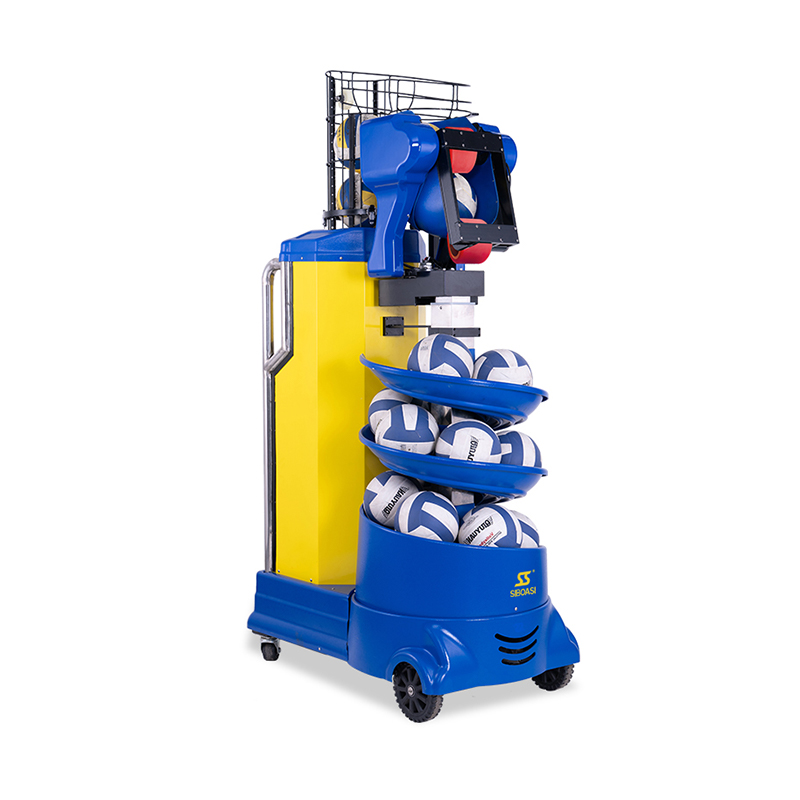
Training equipment used daily by multiple teams needs to withstand repeated stress without losing accuracy. A well-built serving machine should meet the following standards:
- A stable base or wheel-locking mechanism that prevents shifting during high-speed operation
- Durable housing materials that resist wear from repeated ball contact and outdoor exposure
- Consistent mechanical calibration that maintains accuracy after thousands of serve cycles
- Low-maintenance components designed for daily use across long training seasons
Institutions purchasing this equipment for shared use across multiple teams should prioritize stability and material durability alongside programmable features, since machines that shift position mid-session or degrade quickly under repeated use ultimately reduce training value.
Training Outcomes Supported by Serving Machines
Beyond convenience, intelligent serving machines directly contribute to measurable skill development. Consistent, realistic serve delivery allows players to build reliable muscle memory for passing and receiving technique, since each repetition closely matches the last in speed and trajectory unless deliberately varied. Randomized or interval-based sequences sharpen reaction time and decision-making, since players must read incoming ball speed and angle without advance warning, much as they would in a live match. For coaches, the ability to isolate specific variables, such as testing a player's response to fast, low serves versus slow, high ones, makes targeted skill diagnosis far more efficient than relying on live rally play alone.
Selecting the Right Machine for a Training Program
When evaluating options for a club, school, or training academy, decision-makers should weigh the following factors:
- The range of player levels the machine needs to support, from youth beginners to competitive athletes
- Whether the control interface allows coaches to save and reuse custom training sequences
- The physical footprint and portability needed for indoor courts, outdoor courts, or multi-venue use
- Long-term maintenance requirements and availability of replacement parts
- Manufacturer support for calibration, training, and after-sales service
Matching these considerations to a facility's specific training goals ensures the equipment investment translates into consistent, measurable improvement across all levels of play, from foundational technique to advanced tactical preparation.



 Español
 عربى
عربى