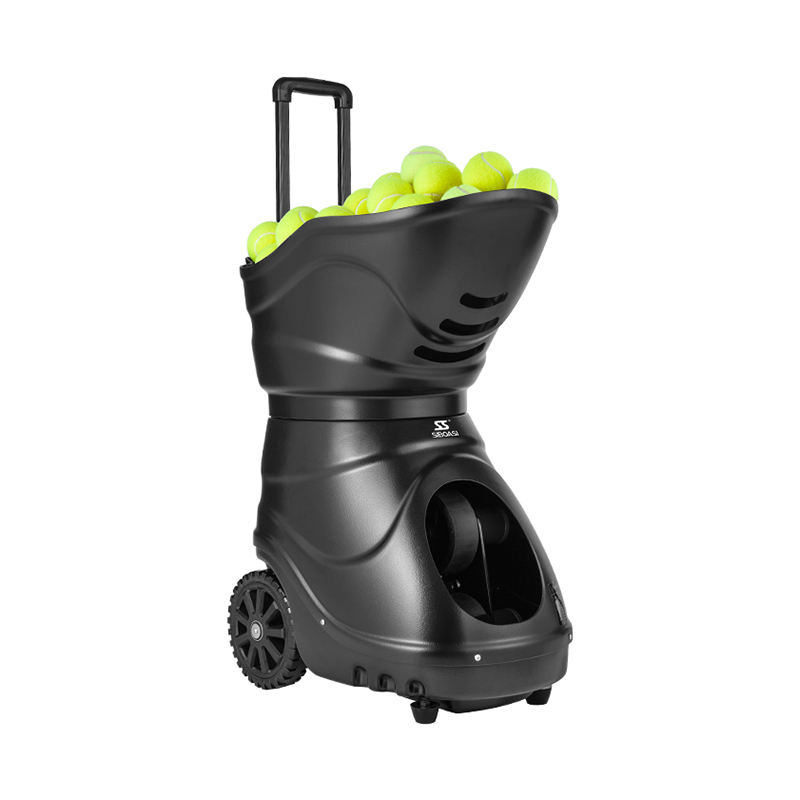
Start With How Your Club Actually Trains Players
A club running four beginner clinics a week has almost nothing in common, equipment-wise, with one building out a junior academy or offering members solo practice slots. Before comparing specs, map out who will actually be using the machine and how often. Group classes need a machine that can run long, repetitive drills without jamming. Private coaching benefits more from precise spin and placement control. Academies training competitive juniors need something that can scale difficulty as players improve, session after session, for years.
Clubs building out commercial venue training setups usually end up needing a machine flexible enough to cover several of these scenarios at once, since the same unit might serve a 9 a.m. beginner clinic and a 6 p.m. advanced squad session on the same day.
Ball Capacity and Feed Rate for Continuous Club Use
A home machine holding 50–100 balls is fine for solo practice. A club machine running back-to-back sessions needs considerably more — 150 balls or more is a reasonable baseline for group use, since constant refilling eats into court time and patience alike.
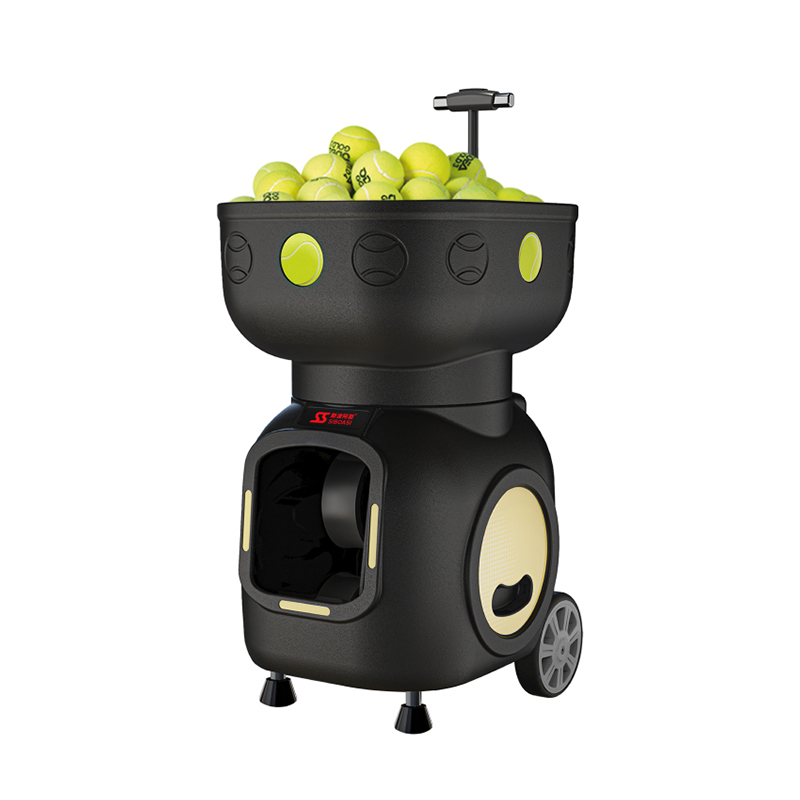
Feed rate matters just as much as capacity. Look for an adjustable interval, typically somewhere between 1 and 10 seconds between balls, since this single setting controls drill difficulty more than almost anything else on the machine. A coach running a footwork drill for beginners needs a slower, forgiving rhythm; the same coach running a reaction drill for advanced players needs something close to match pace. For a sense of what's available at different capacity and feed-rate tiers, it's worth browsing the full lineup of intelligent tennis ball serving machines before narrowing down to a shortlist.
Spin, Landing Zone Control, and Internal Oscillation
Realistic ball delivery depends on more than raw speed. A club-grade machine should let coaches independently adjust topspin, backspin, and flat shots, along with trajectory height and depth, so the same unit can feed a gentle rally ball to a beginner and a heavy, low topspin drive to a competitive player.
Oscillation type is worth paying closer attention to than most buyers do. External oscillation — where the machine's head visibly swings side to side — is cheaper but telegraphs the next shot and produces a mechanical noise that carries across adjacent courts. Internal oscillation hides the feed direction inside the housing, so players read the ball rather than the machine, and it runs noticeably quieter, which matters when several courts share the same facility.
App Programming and Multi-User Memory for Group Coaching
Clubs managing dozens of members with different skill levels benefit enormously from machines that store multiple drill profiles. Instead of resetting speed, spin, and oscillation by hand between every session, a coach can load a saved routine built specifically for a given group or player, then move straight into the drill.
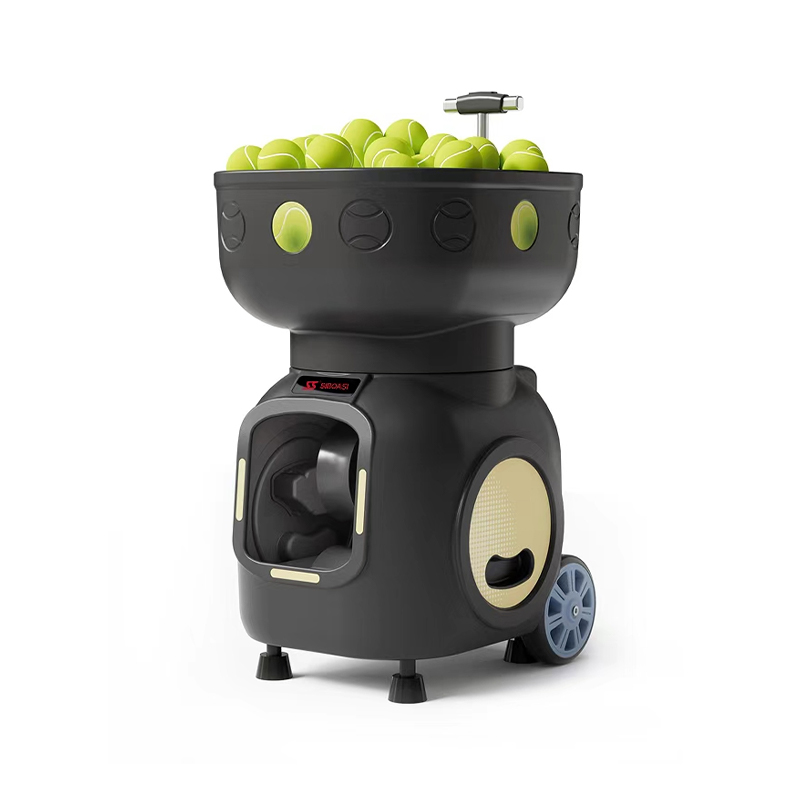
Some models go further, using an AI-driven core to generate sequenced drills or adjust delivery based on how a player is performing in real time. For clubs that want this level of programmability, an APP-enabled machine with 21-zone precision drill programming allows coaches to build and save detailed, repeatable drill patterns across a full roster of players. For elite squads training toward tournaments, a voice-controlled machine built for professional team and tournament training lets a coach adjust drills hands-free mid-session, without breaking a player's rhythm.
Durability and Power Options for Daily Commercial Use
A club machine typically runs for hours a day, several days a week — a duty cycle that a consumer-grade unit was never built to withstand. Ask suppliers directly about motor type and expected duty cycle, frame material and weatherproofing for outdoor courts, and battery life or charge time if the machine isn't run on direct power.
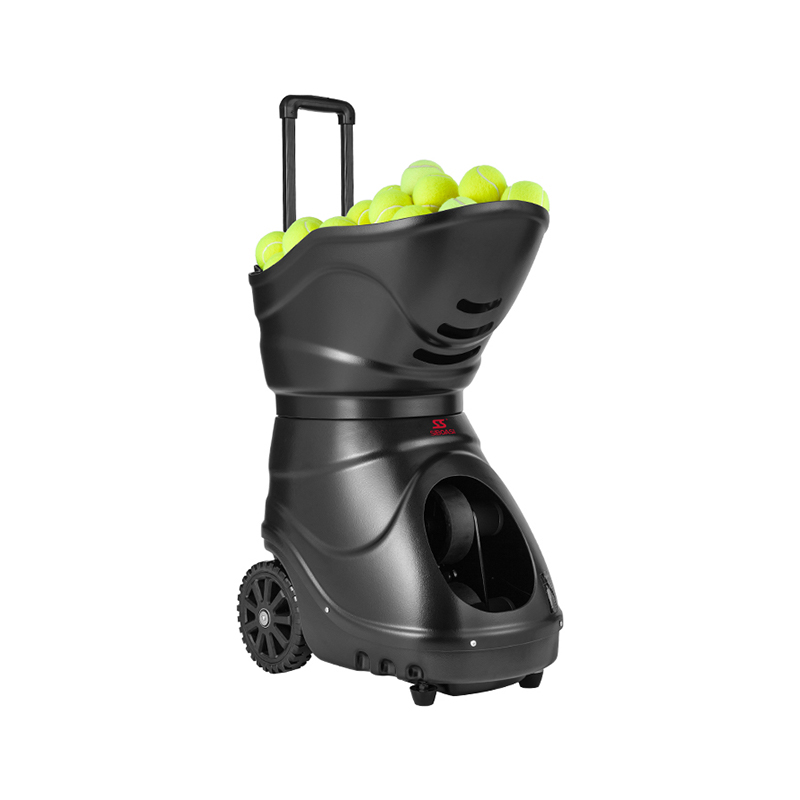
Longevity is the number that actually matters for a commercial buyer. A well-built club machine should hold up for 8–10 years of regular use, not a season or two. Weight and wheel quality are also worth checking if the machine needs to move between courts or in and out of storage — a machine that's a hassle to transport tends to get parked permanently on one court, which cuts its value across the rest of the facility.
Warranty, Support, and Total Cost of Ownership
Because club machines see so much use, warranty coverage, responsive support, and easy access to replacement parts — ball tubes, wheels, belts — matter more here than they would for an occasional home user. Before buying, it's worth checking common questions from club buyers around service length, parts shipping, and what's actually covered.
Price alone is a poor way to compare options. Factor in maintenance and replacement part costs, running costs, and the downtime risk of an unreliable unit against the purchase price. A machine backed by real manufacturer support, such as professional training solutions for teams and academies, or a higher-capacity option like a 35-zone smart programming machine designed for high-volume pro training, usually costs less over its full lifespan than a cheaper unit that needs replacing every year or two.
Matching the machine to how your club actually trains — not just to a spec sheet — is what makes the investment pay off. Get that part right, and the machine you buy today should still be running solid sessions years from now.



 Español
 عربى
عربى