As a basketball shooting coach, your goal goes beyond putting more shots up in practice. You’re shaping muscle memory, correcting small flaws, and building the confidence that lets players make game-winning shots when it matters. With so much at stake, coaches need reliable methods and tools to help athletes improve steadily. In this guide, we’ll walk through the modern shooting coach’s toolkit, from fundamental drills to intelligent equipment that provides instant feedback.
The Evolved Role of a Basketball Shooting Coach
A basketball shooting coach is no longer just a player who can demonstrate a set shot. Today, you’re part biomechanics expert, part data analyst, and part motivator. The key is to break shooting down into teachable parts—stance, hand placement, elbow alignment, knee drive, and follow-through—then put it back together in fluid game scenarios.
A typical practice session should be a mix of:
- Mechanical repetitions at a comfortable pace
- Game-speed simulations with defenders and pass packages
- Constraint-based drills that force body adjustments
- Regular progress checkpoints using video or shot tracking
By keeping this structure in mind, you can design workouts that are both structured and flexible. The role also requires communication—explaining why a certain adjustment helps, not just telling players what to do. When athletes understand the “why,” they commit to the change.
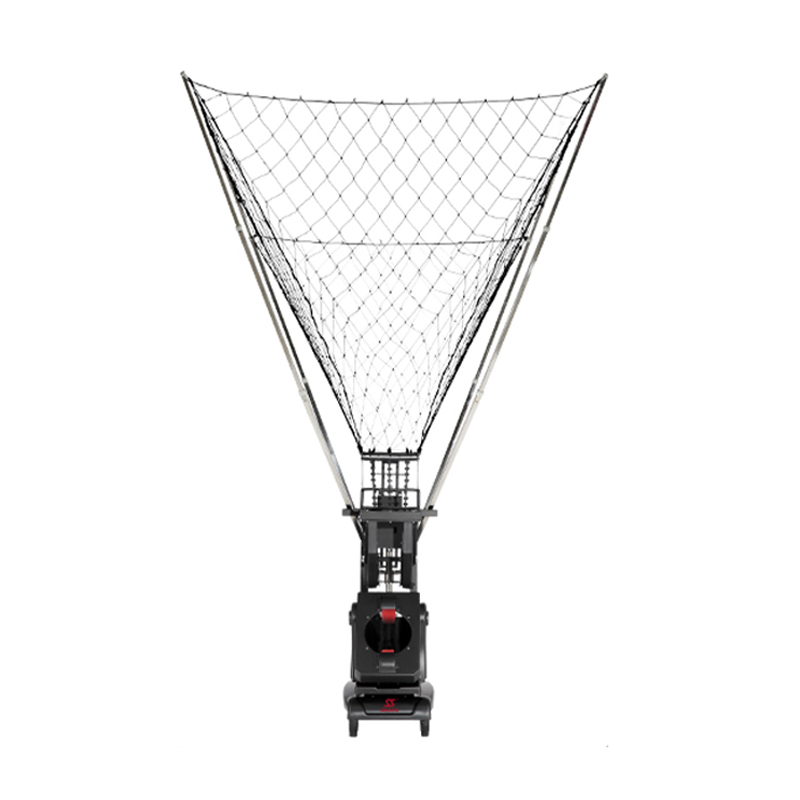
With modern smart equipment, you can also offload the monotony of passing and rebound collection, giving you more time to observe and interact with each player.
Common Shooting Myths That Slow Down Progress
Every basketball shooting coach has seen a player arrive with conflicting advice from online videos, well-meaning relatives, or a previous trainer. Some of this advice is helpful; some is not. Part of your job is to clear away the confusion and focus on principles that truly affect performance.
- “Your elbow must always be tucked under the ball.” Not true. The elbow position varies by shooting style, distance, and body type. Insisting on a rigid angle can create unnecessary tension.
- “Power starts from the arms.” Actually, a smooth jump shot begins with leg drive. Your lower body generates most of the force, while your arm controls direction and backspin.
- “Practice only at full speed.” While game speed matters, slow-motion form work lets athletes feel correct positions before adding pace.
- “Repetition alone fixes everything.” Repeating bad mechanics simply engrains errors. You need deliberate, correct repetition—which means constant feedback.
Challenging these myths is not about being contrarian; it’s about protecting player confidence and rewarding patience. A coach who insists on reliable fundamentals gives the player a solid foundation, especially when pressure mounts in a real game.
Smart tools help here too. A machine that delivers precise, repeatable passes lets the athlete focus purely on their form, not on adjusting to an erratic toss from a teammate or feeder.
Data-Driven Training: The Coach’s New Edge
In modern basketball, every possession is measured, and shooting performance is one of the most closely watched metrics. For a basketball shooting coach, having data on shot attempts, makes, misses, arc, and rebound height provides an objective picture of a player’s progress. Instead of guessing whether a tweaked release is working, you can compare before-and-after numbers.
Consider how traditional and data-enhanced coaching differ:
Traditional versus data-driven shooting sessions
| Focus |
Traditional |
Data-Enhanced |
| Shot volume |
Repetition with variable form |
Targeted reps with real-time feedback |
| Progress tracking |
Coach’s memory and hand notes |
Automatic hit-rate and accuracy logs |
| Player motivation |
Voice corrections |
Visual stats and milestone alerts |
| Time management |
Manual ball collection |
Multi-angle serving with minimal rest |
When you add an intelligent basketball serving machine, the data becomes even more actionable. For example, our K2100A model tracks hit rate in real time on its LED screen, so players can immediately see whether a drill is improving consistency. They can adjust their release point or foot position and watch the numbers respond. This direct feedback loop accelerates learning and builds self-correction skills.
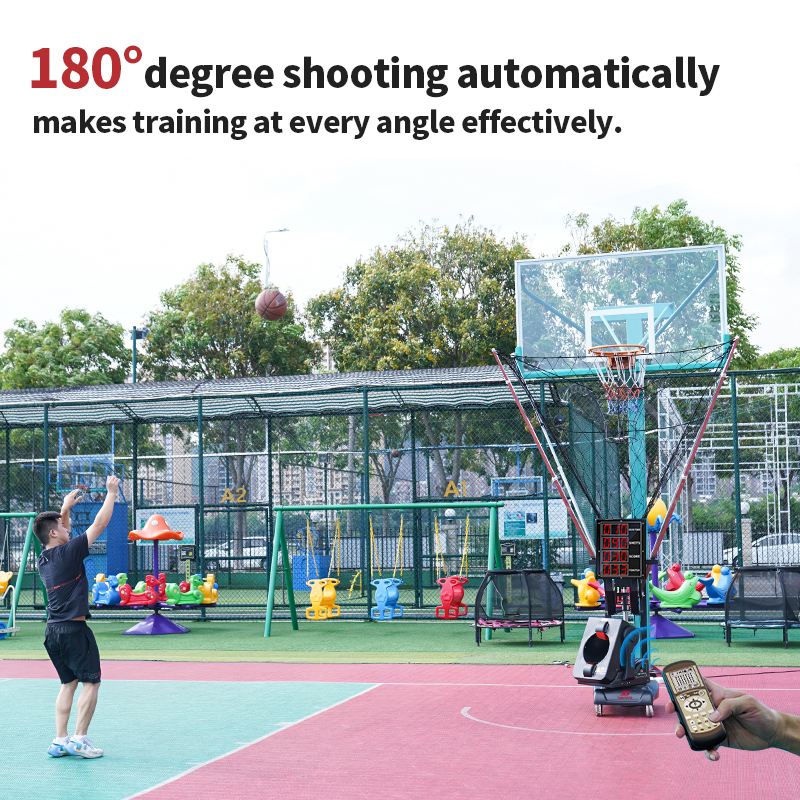 K2100A Basketball Machine with LED Display and Real-Time Hit Rate TrackingThis model provides immediate hit rate feedback on an LED screen, helping players adjust technique on the spot. It supports multi-point drills, spin delivery, and app control, making it a complete tool for data-driven training.View Product →
Data does not replace your coaching eye. It adds another layer of insight, confirming what you see on the court and catching what you might miss. Over time, the accumulated information helps you tailor training plans to each player’s strengths and weaknesses.
Key Drills Every Shooting Coach Should Know
Even with smart equipment, a basketball shooting coach still needs a toolbox of reliable drills. These exercises build the habits players use in games.
Form Shooting
The cornerstone of every shooting session. Stand close to the basket, focus on proper elbow alignment, knee bend, and a soft follow-through. Players should make 10 to 15 shots without rushing.
Catch-and-Shoot, One Dribble Pull-Up
Design cones or passing lines that force a player to catch on the move, set their feet immediately, and rise into a balanced shot. You can use a ball machine to vary the pass location and speed, keeping the drill game-realistic.
Spot Shooting and Movement
Place players around the key at designated spots. Move from spot to spot, catching and shooting each time. This replicates the way a player moves without the ball, a crucial skill in modern offense.
Pressure Free Throws
Simulate game pressure by connecting free throw outcomes to a quick sprint or a small consequence. For instance, miss a free throw and the whole team runs a half-court sprint. This teaches focus and recovery.
You can adapt each drill to your team’s skill level. A beginner may start closer to the basket, while advanced players extend to three-point range and add a defender.
If you’re running a professional or semi-pro team, these drills scale well in a structured environment. See how our professional training solutions support coaches with equipment designed for high-volume, high-intensity practices.
Choosing Equipment That Supports Your Coaching System
No two teams are alike, so a basketball shooting coach needs adaptable equipment. The best training machines let you control ball speed, arc, and delivery interval while allowing you to program different spots on the floor. This flexibility keeps players engaged and allows you to change focus without pausing practice.
When evaluating options, look for:
- Multiple drill patterns, from simple straight passes to complex multi-point routes.
- Adjustable speed and spin so you can coach both younger players and elite athletes.
- Remote control or app integration, enabling adjustments from anywhere on the court.
- Sturdy construction that can handle daily abuse and simple transport.
Our K2101A is a good example. It combines multipoint drill modes with app control, so you can set up a full circuit and then change the drill based on how players respond. Teaching moments happen naturally when you can pause, explain, and resume.
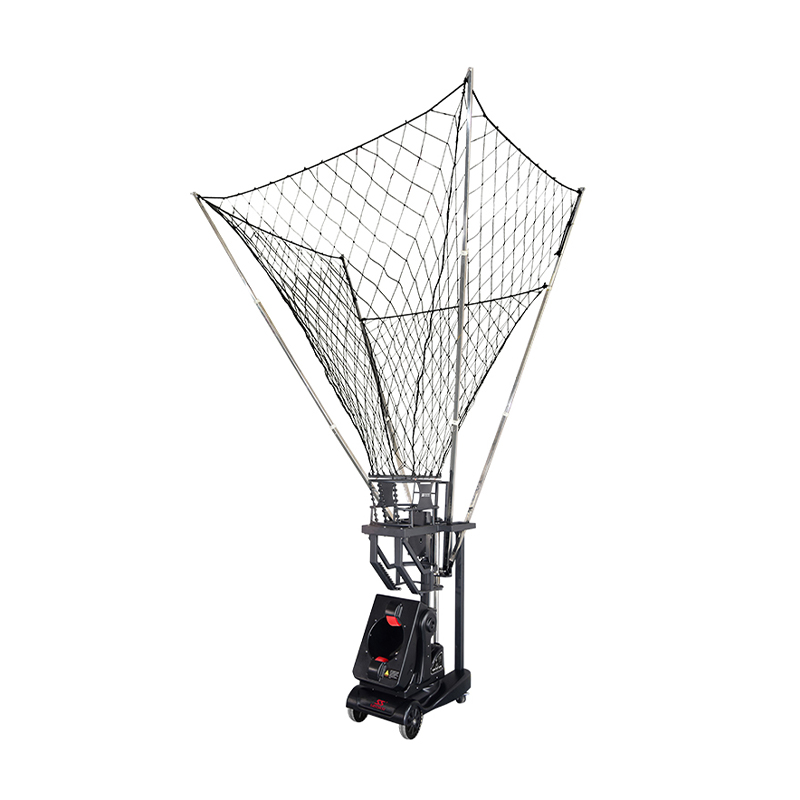 K2101A Multi-Point Drill Smart Basketball Trainer with APP ControlThis trainer combines multi-point drill modes with full smartphone app control, allowing coaches to modify drills as players respond. With spin and random delivery, it is well suited for beginners and younger athletes building correct fundamentals.View Product →
For coaches working with younger athletes, our youth training solutions offer simplified programming and safer speeds, helping beginners learn the correct base before adding power.
A Sample Weekly Practice Schedule
To give you a practical starting point, here is a sample one-week plan that incorporates smart basketball serving equipment. Each session runs roughly 45 minutes and includes a short warm-up, the main drill block, and a cool-down.
Example one-week shooting practice schedule
| Day |
Focus |
Drill Example |
Machine Use |
| Monday |
Form shooting |
One-dribble pull-ups at 15 ft |
20 reps, low-to-high passes |
| Tuesday |
Catch-and-shoot |
Corner three-point shooting |
14-point lob passes, 10 makes per spot |
| Wednesday |
Off-hand work |
Finishing with left/right |
Random spin to recreate passes |
| Thursday |
Game-speed conditioning |
Transition pull-up |
30 reps with high-speed passes |
| Friday |
Pressure shooting |
Free throw rhythm |
Alternating feed and rest timed |
| Saturday |
Light reps / optional |
Spot shooting from elbow |
Custom 21-point drill, 5 makes per point |
The beauty of this plan is its versatility. For younger athletes, reduce the number of reps and distance. For advanced players, increase speed and add game-condition movements. You, as the basketball shooting coach, stay central to the process—reading body language, delivering encouragement, and adjusting the drill.
For a truly demanding workout, the K3 precision basketball trainer spins the ball closer to real passes and offers up to 60 horizontal drill positions. It’s excellent for high-volume sessions where players need to adapt rapidly.
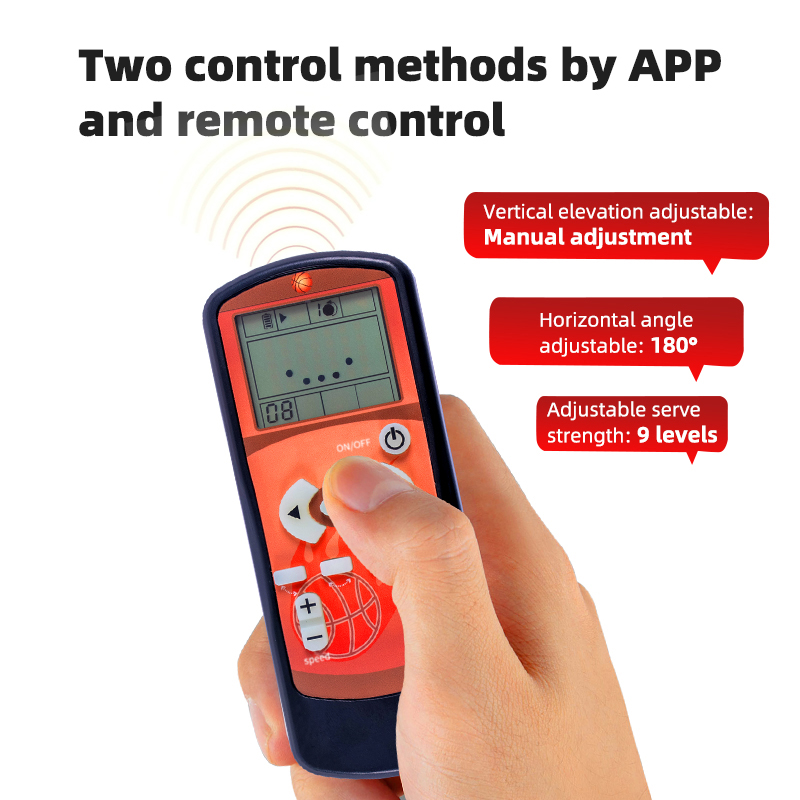 K3 Precision Basketball Training Machine with Spin Delivery and 60 PositionsThe K3 delivers spin-fed balls and offers 60 horizontal drill positions for high-volume sessions. Its app control and folding design support rapid adaptation and efficient training, ideal for demanding workouts and skill refinement.View Product →
Becoming an effective basketball shooting coach is about staying humble and curious. You refine your eye, teach with clarity, and embrace tools that give athletes an edge. Smart basketball serving machines will not replace your intuition; they amplify it. They let you run demanding drills, collect meaningful data, and keep every player engaged. Whether you train beginners or seasoned pros, the combination of sound fundamentals and the right equipment can make all the difference.



 Español
 عربى