There is a moment every player knows. The shot leaves your hand, feels perfect, and clangs off the back rim. Or it feels flat and drops through cleanly. For years the only way to sort out what was really happening was a coach with a clipboard, or a partner willing to rebound for an hour. A basketball shot tracker changes that equation. It counts, it records, and it quietly tells you the truth about your shooting, rep after rep.
We have spent nearly two decades building intelligent training equipment for ball sports, and basketball shooting is one of the areas where data makes the biggest difference. Not because numbers are magic, but because they remove guesswork from a skill that is built almost entirely on repetition. This guide walks through what these tools do, how the main types compare, and how to use the data so it actually changes your shot.
What a Basketball Shot Tracker Really Measures
At its simplest, a shot tracker answers one question: how many went in out of how many you took? That makes-over-attempts number is still the foundation of everything else, and it is the number most players never track properly.
Modern tools go further. Depending on the setup, you can capture where the shot came from on the floor, whether it was a catch-and-shoot or off the dribble, the arc and entry angle, the time from catch to release, and how all of it changes once you are tired. Some systems count automatically through sensors or cameras. Others ask you to tap a screen. A newer group of tools folds the counting into the training equipment itself, so the machine feeding you the ball also reports how many you made.
The distinction that matters is between counting and diagnosing. A tally tells you that you made six of twenty from the left wing. A useful tracker tells you why those fourteen missed: short on the front of the rim, rushed release, fading away from the pass. That second layer is where improvement actually lives.
Why Tracking Turns Practice Into Progress
Memory is a generous editor. Ask any shooter how they did and most will remember the four in a row at the end, not the cold stretch that came before. Tracking replaces that flattering story with something you can work with.
- Honest feedback: makes and misses get recorded whether the session felt good or not, so you stop building decisions on a mood.
- Enough samples: a twenty-shot set tells you almost nothing, but three hundred shots across a week shows real tendencies by zone.
- Motivation: a visible hit rate turns a vague session into a target, and chasing a number keeps focus high when nobody is watching.
- Better coaching: when the shooting stats are already collected, a coach spends the session on footwork and release instead of on counting.
None of this replaces good technique or hard work. It simply points the hard work in the right direction.
The Main Types of Shot Tracking Tools
Broadly speaking, four approaches cover most of the market. They differ in what they record, how much setup they demand, and who they suit best.
A quick comparison of the four main shot tracking approaches and the situations each one fits.
| Type |
What it captures |
Best fit |
Setup effort |
| Manual or app counters |
Makes, attempts and percentage, sometimes shot zones tapped by hand |
Solo players and parents on a tight budget |
Minimal, phone only |
| Wearable and sensor rigs |
Release data, arc, make or miss in real time |
Teams wanting automated statistics |
Moderate, sensors and charging |
| Video and AI analysis |
Full shot charts plus mechanics on film |
Coaches reviewing technique frame by frame |
Higher, camera placement and software |
| Smart ball machines with built-in tracking |
Every fed repetition plus a live make rate on a display |
Individual work and small-group training |
Low, one machine, one power point |
When the Machine Does the Counting
For anyone training alone, the biggest obstacle is not information, it is rebounds. A shooting machine solves the rebounding problem and, in the better models, quietly solves the tracking problem at the same time. You set a spot, set a tempo, and shoot. The machine collects the ball, returns it, and logs what happened.
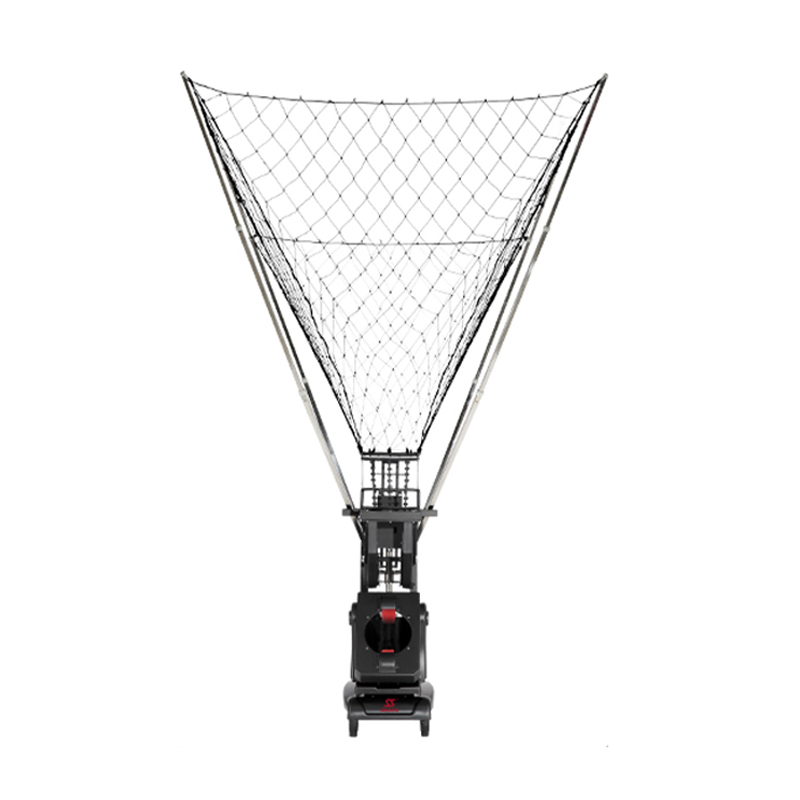
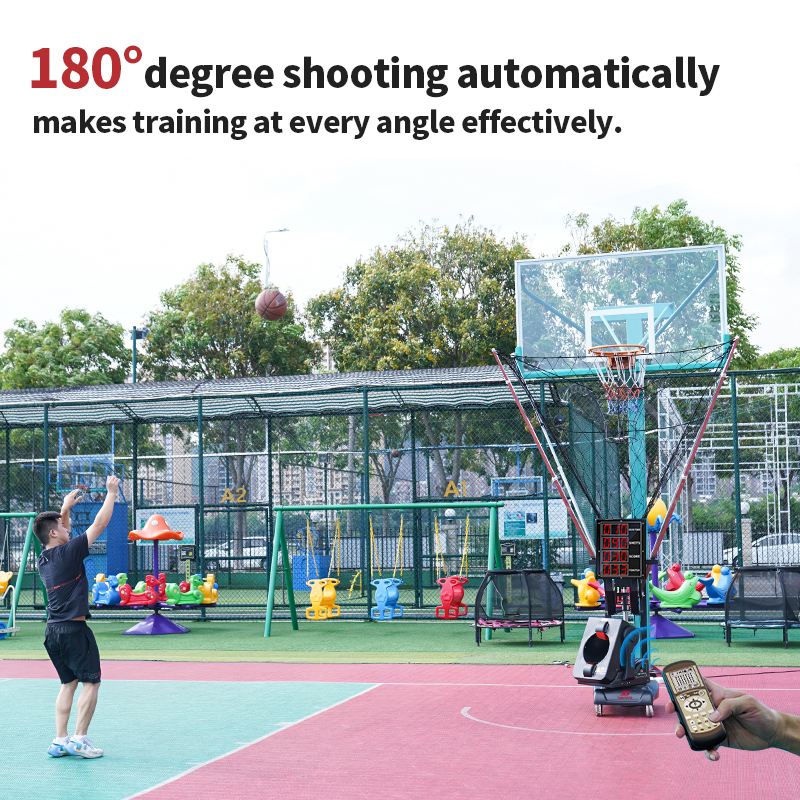 K2100A Basketball Shooting Machine with Live LED FeedbackCombines ball return with real-time LED shot statistics and multi-point drills, making solo shooting sessions measurable and easier to adjust between reps.View Product →
Our K2100A is a good example of that idea. Its LED display shows your score and your live hit rate as you work, so the feedback arrives between reps instead of after the session. That immediacy matters. When a player can see the percentage shift after adjusting their arc or release point, the correction sticks far faster than a note written down an hour later.
There is a practical side too. Because the machine controls the pass, the speed and the angle, every rep starts the same way. That consistency is what makes the hit rate meaningful in the first place.
What to Look For Before You Buy
Features are easy to list and harder to judge. These are the questions we would ask in your position.
- What exactly is recorded? A pure make or miss count is useful, but location and shot type turn it into a coaching tool.
- Does it need your phone in your hand? A tool that pulls your attention to a screen between shots can hurt rhythm, so look for something that displays or logs without interrupting you.
- Can it repeat a spot? Repeatability is the quiet hero of shooting work, and it is where programmable delivery pays off.
- Is it portable and durable enough for your setting? A gym machine and a driveway machine face very different conditions.
- Can more than one player use it? Clubs and schools should check how quickly a session can be reset for the next athlete.
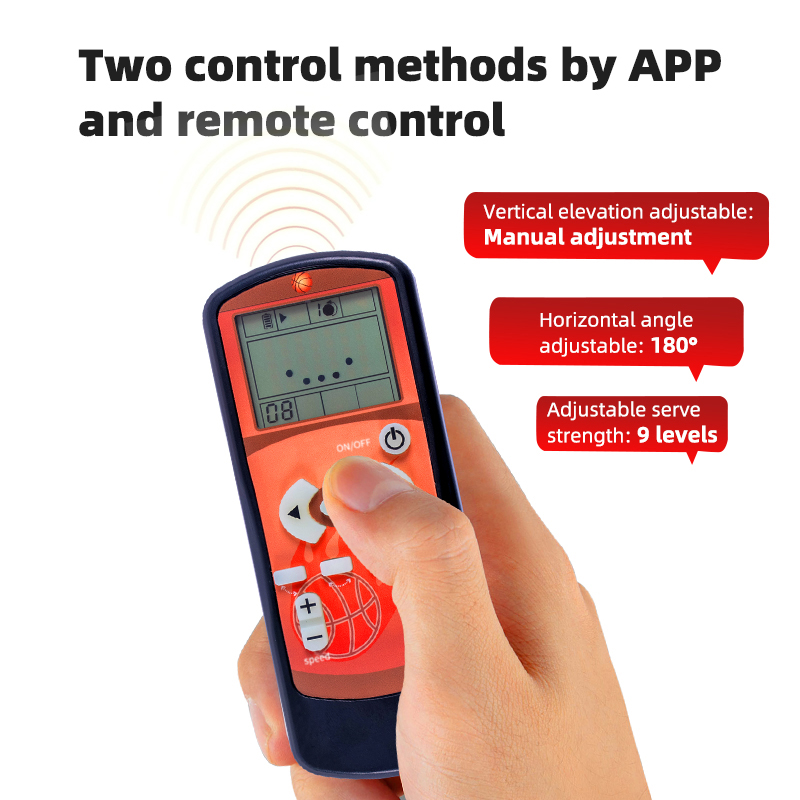 K3 Precision Basketball Training Machine with Spin DeliveryOffers sixty selectable court positions and spin delivery for repeatable catch-and-shoot drills, with app and remote adjustments for consistent, position-specific practice.View Product →
Repeatability is worth expanding on, because it separates training from messing about. The K3, for instance, works across sixty horizontal positions with spin delivery, which lets a coach build a circuit of exact spots and shot types rather than approximate ones. When the delivery is identical every time, the only variable left is the shooter, and that is precisely what you want to measure.
Drills That Make the Data Useful
Numbers only help if they are attached to a repeatable task. These five structures work well whether you are logging manually or letting a machine do the counting.
- Build a baseline. Take ten shots from each of five spots and record the results. That is your starting point, not a judgment.
- Run timed sets. Two minutes of continuous catch-and-shoot, counting makes. Fatigue exposes changes in your release that casual shooting hides.
- Track one variable at a time. If you are working on arc, do not also change your stance. Isolate the change and watch the hit rate respond.
- Add movement. Stationary shooting builds a base, but game shots come off cuts and screens. Programmed multi-point sequences get you closer to real conditions.
- Review weekly, not nightly. A single session is noise. Patterns across a week are signal.
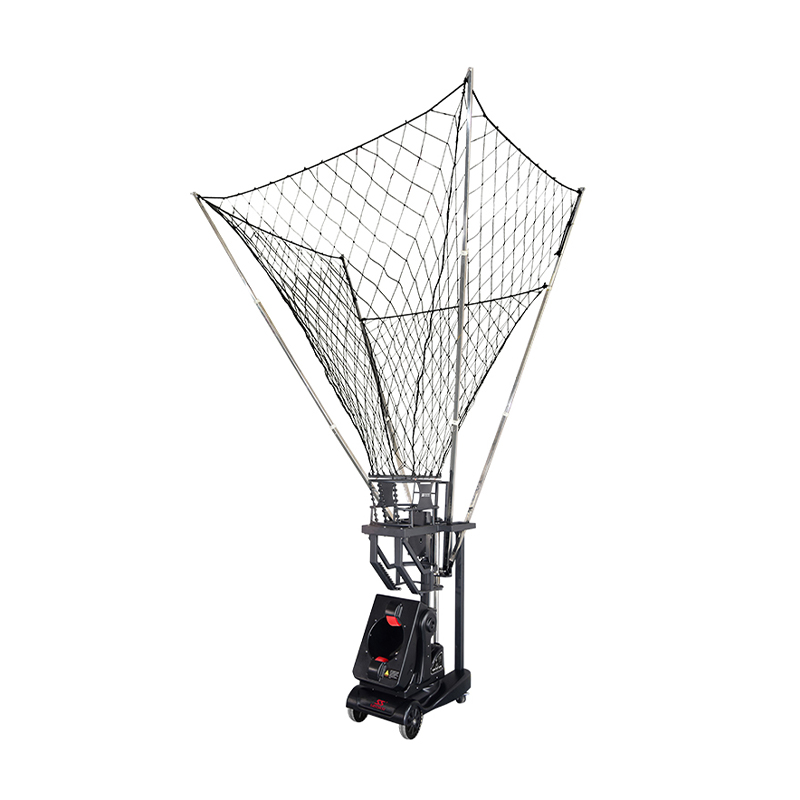 K2101A Smart Basketball Training Machine with App-Controlled DrillsBrings multi-point shooting sequences and app control together, so planned drills can run continuously with less manual resetting and more repeated shooting.View Product →
For players who want those sequences ready to run, the K2101A combines multi-point drill modes with app control, so a session can be planned on a phone and executed on court without resetting the machine by hand. That convenience is not a luxury. The easier a drill is to start, the more often it actually gets done.
Matching the Tool to the Setting
The right setup depends far more on your environment than on your budget. In a driveway or a small home gym, a compact machine with an accurate repeatable feed and a clear display covers almost everything, and a simple app counter handles the rest. In schools, the priority shifts to durability and quick rotation between students, which is why our school and university training setups focus on equipment that a whole class can use without supervision.
Clubs and academies usually need a mix: tracking for individual development, and programmable delivery for squad sessions where dozens of players cycle through the same drill. Professional programs tend to want the deepest level of control, including exact spots, spin and tempo, which is the thinking behind our professional training solutions. In every case the principle is the same: match the data you collect to the decisions you actually make.
Common Questions Players Ask
Do I need video analysis to get useful data?
No. A make rate by zone, collected consistently over a few weeks, will already change how you practice. Video adds mechanical detail, but it is a second step rather than a first one.
How many shots before the numbers mean something?
Treat any single set as a warm-up, not evidence. A few hundred recorded attempts across several sessions gives you a percentage worth trusting.
Can I track effectively without a training partner?
Yes, and this is where a ball machine earns its place. It rebounds, it feeds, and on tracked models it counts, which removes the two jobs that make solo shooting inefficient.
Is this only for serious competitors?
Not at all. Young players benefit most from early feedback, because good habits formed at twelve are far easier to keep than bad ones fixed at twenty.
A basketball shot tracker is not a shortcut. It will not add range or fix a hitch in your release on its own. What it does is remove the fog, so that the hours you spend in the gym produce something you can see and build on. Start with a small baseline, pick one variable, and let the numbers guide the next session. That habit, more than any single piece of equipment, is what turns a good shooter into a consistent one.



 Español
 عربى