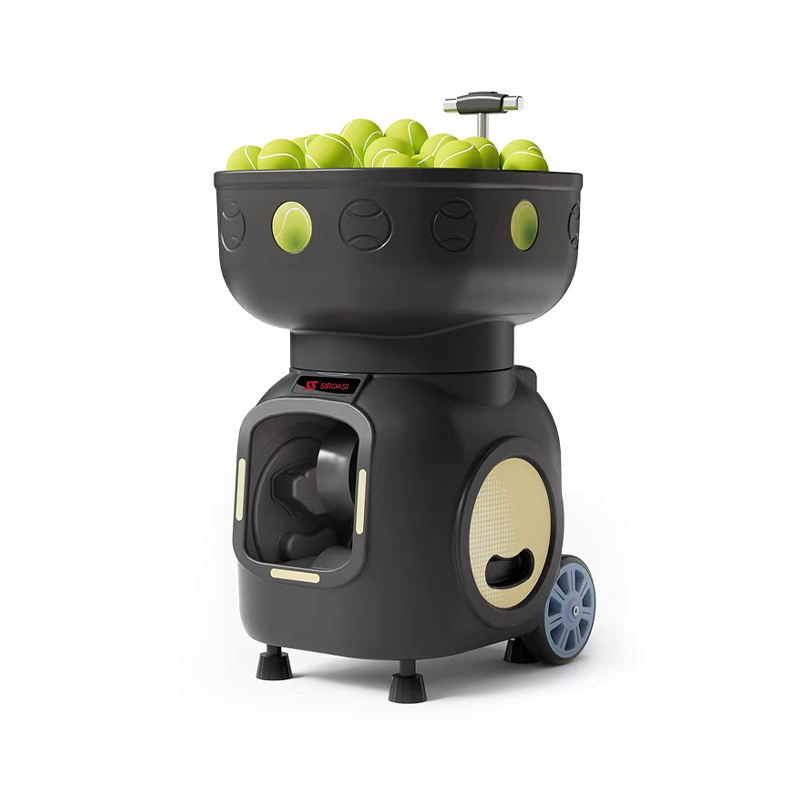
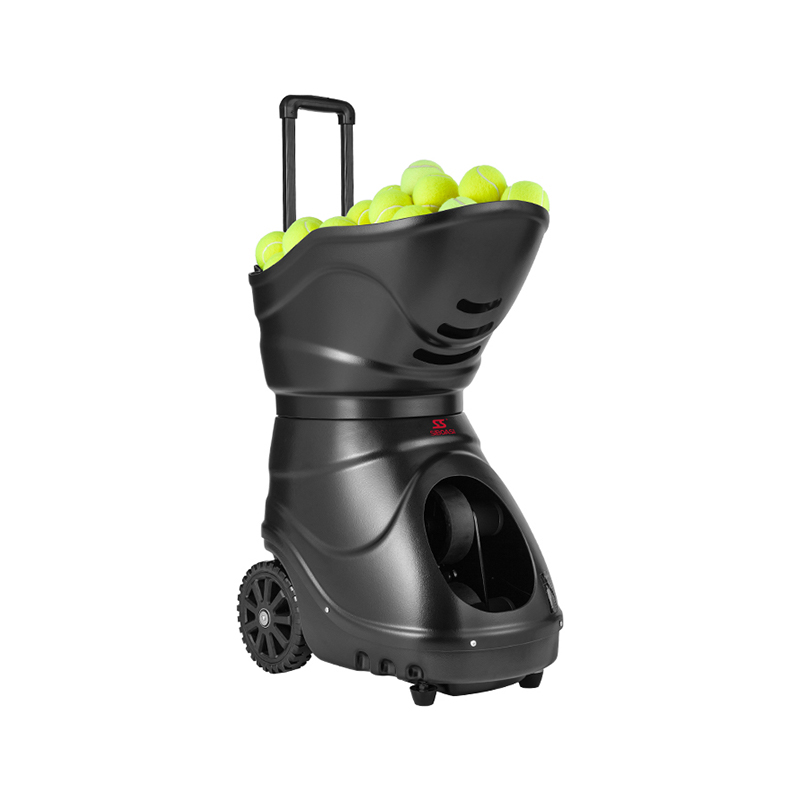
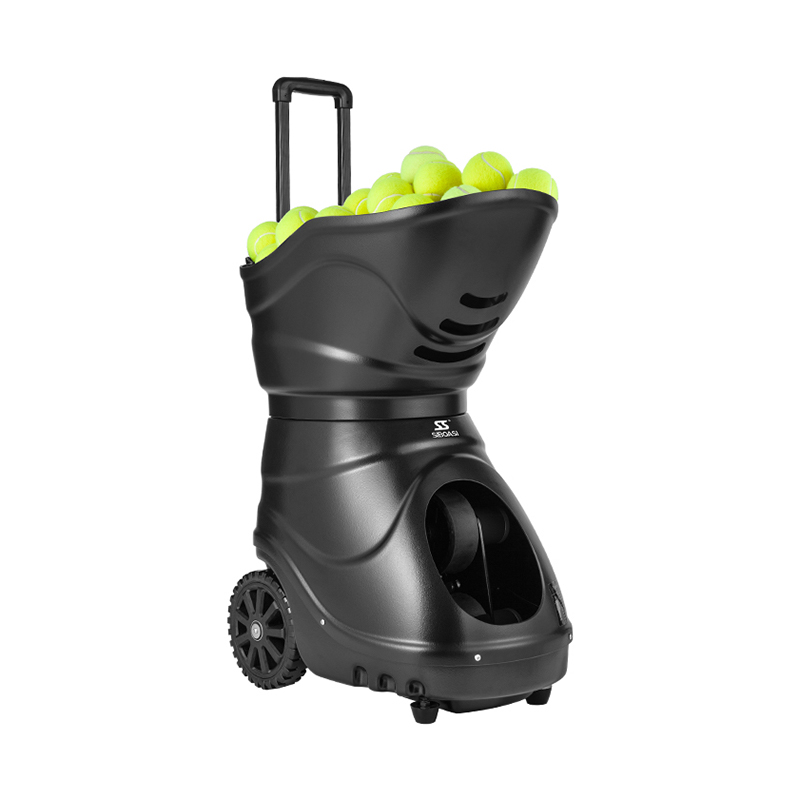
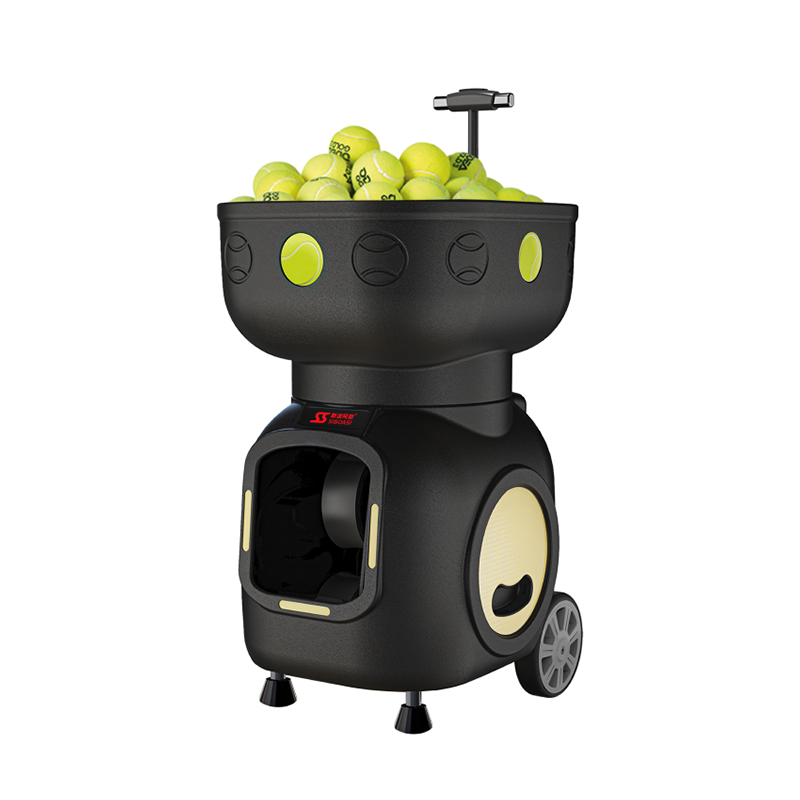
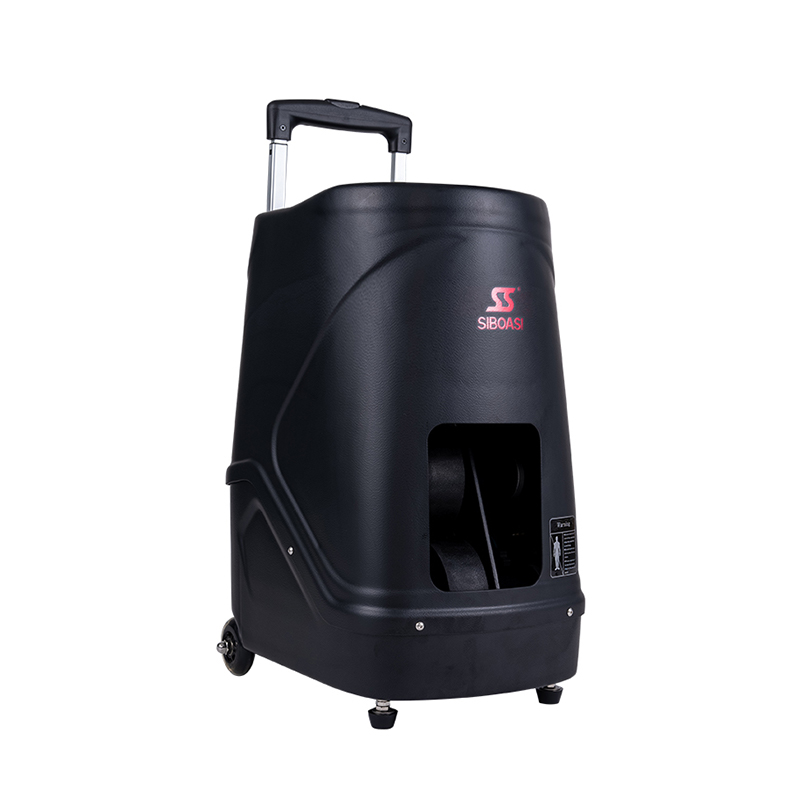
The best tennis machines are not automatically the ones with the longest specification sheet. They are the machines that make it easier to show up, repeat good habits, and measure progress without turning practice into setup work. That sounds simple, but it is where many buyers get stuck: one model promises every feature under the sun, another looks like a bargain, and both can end up in the garage if they do not fit the way you train.
At Siboasi, we have spent years designing and manufacturing intelligent ball machines for homes, clubs, schools, and performance programs. The most satisfied owners tend to ask practical questions first. How quickly can I get it on court? Can I control the feed without reading a manual? Will it still fit my training in two years? This guide walks through those questions so you can compare options with a clearer head.
What Makes the Best Tennis Machines Worth the Investment?
A tennis machine earns its place when it makes repetition useful, not mindless. The first job is consistency: the machine should deliver a similar speed, trajectory, spin, and landing pattern when you ask for it. That repeatability lets you build a skill, test a small change, and see what happens.
The second job is useful adjustment. You do not need dozens of settings, but you do need the ones that change the drill: speed, feed interval, elevation, oscillation, and spin. A simple control system you understand will beat a complicated one you avoid.
- Repeatable ball delivery
- Speed and spin settings that match your level
- Oscillation and landing-zone control for movement
- App or remote control that is quick to use
- Battery life and transport that suit your court
- Service and parts available where you live
If a feature does not change how you practice, it is probably not worth paying for. The best tennis machines feel like a training partner, not a project.
Match the Machine to the Way You Actually Play
Beginners and casual hitters usually need less, not more. A predictable feed, a comfortable speed range, and easy setup matter more than advanced programming. The goal is to groove contact and footwork without chasing balls that are too fast or inconsistent.
Improving club players benefit from spin control, oscillation, and programmable patterns. This is where a machine can simulate a crosscourt rally, alternate forehand and backhand, or put a short ball in front of you after a deep one.
Coaches, teams, and tournament players need quick pattern changes and repeatable tactical drills. They also value controls that let them adjust the session while players are on court. Our professional training solutions are built around that kind of workflow, with sessions that can move from warm-up to pressure situations without long pauses.
One useful rule: choose the machine that fits the next 12 months, not a fantasy version of your training life. If you are not sure, start with a simpler model and upgrade when your practice habits are already established.
A Closer Look at Three Siboasi Machines
There is no single best tennis machine for every player. The better question is which machine matches the work you want to do. These three models cover a useful range, from first sessions to team training.
A quick comparison of three Siboasi tennis machines by player level and training use.
| Model |
Best for |
Control style |
Training strength |
| T1 |
New players and simple home practice |
Basic single-speed operation |
Repeatable introductory feeds |
| T5 |
Intermediate to advanced players |
All-mode scenario control |
Varied rallies and tactical patterns |
| T7 Pro |
Coaches, teams, and tournament preparation |
Voice control and tactical programming |
High-level drill design and team sessions |
T1: A Friendly First Machine
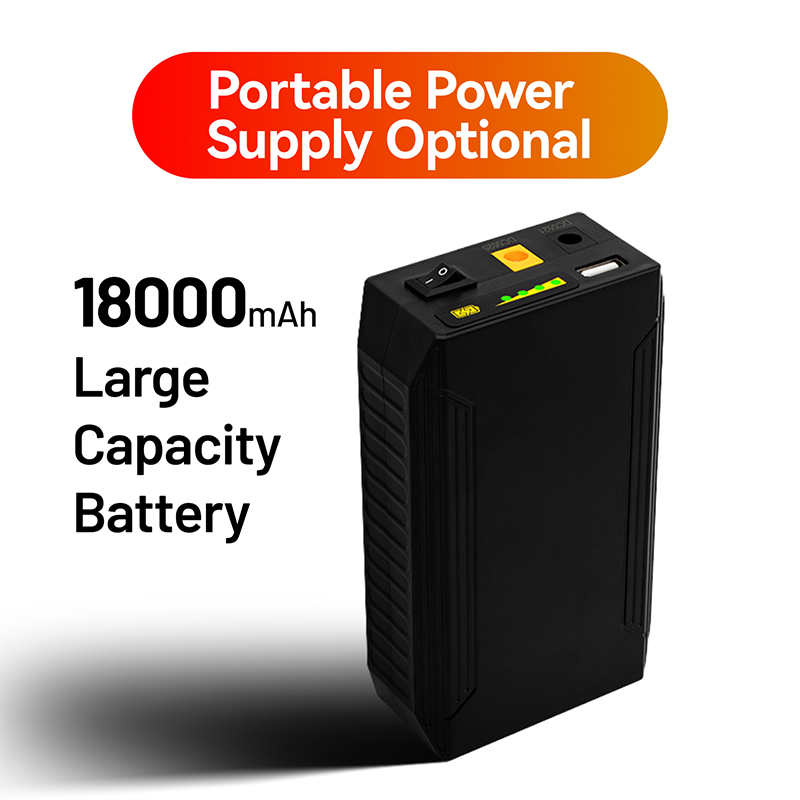 T1 Beginner Single-Speed Tennis Ball MachineA straightforward first machine for beginners, offering repeatable single-speed feeds to build consistent strokes during solo home practice.View Product →
The T1 is aimed at beginners and straightforward home practice. Its basic single-speed operation keeps the focus on repeatable feeds and clean contact rather than complex settings. For a new player, that simplicity is a feature: you can set up, hit, and build confidence without spending half the session adjusting modes.
T5: For Players Who Want Full-Court Variety
 T5 All-Mode Intelligent Match Simulation Tennis Ball MachineFor intermediate and advanced players seeking varied scenarios, this machine simulates match pace and patterns to bridge isolated drills and real rallies.View Product →
The T5 is a better fit for players who want match simulation and varied scenarios. It gives you more ways to change pace, pattern, and point structure, which makes it useful for intermediate and advanced players who are tired of hitting the same ball. If your practice often feels good in isolation but falls apart in rallies, a model with scenario-based training can help bridge that gap.
T7 Pro: A Tactical Tool for Teams
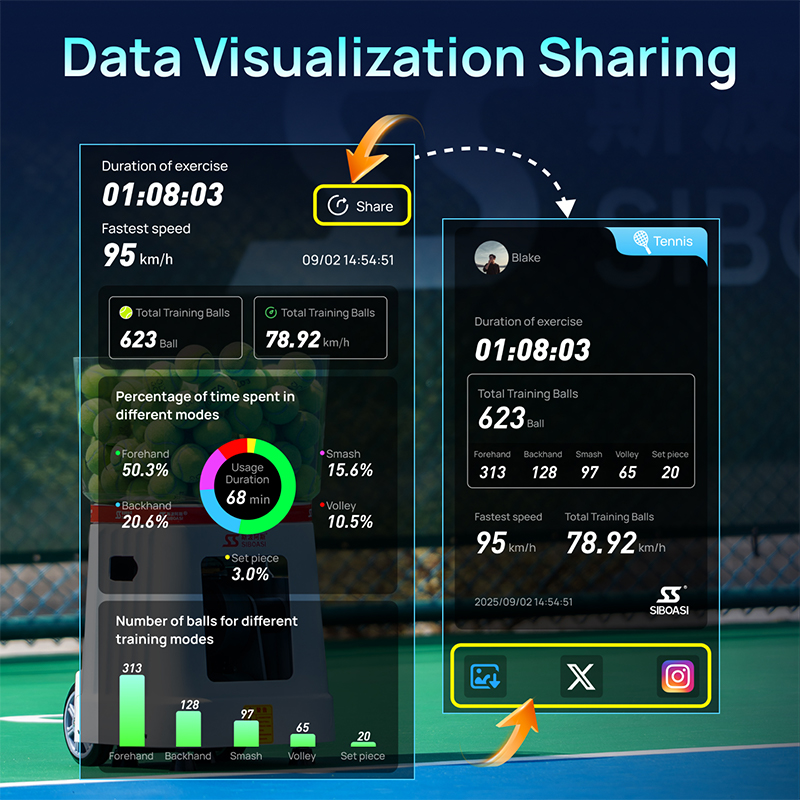 T7 Pro Voice-Control Tactical Tennis Ball Machine for TeamsBuilt for professional teams and tournament preparation, it supports programmable tactical sequences, hands-free voice control, and high-volume rotational drills.View Product →
The T7 Pro is designed for professional teams, tournament preparation, and tactical work. Voice control and advanced programming matter in that setting because coaches need to change drills quickly while players stay in rhythm. It is more machine than many home players need, but for a serious squad it can become a central part of weekly training.
The Details That Decide Whether You Will Use It Every Week
Two machines can look similar on paper and feel completely different in daily use. Portability is the first reality check: can you move it from storage to the court, lift it into a car, and set it up without help? If not, the machine will lose value quickly.
Battery life is the next. Look for realistic court time, a charging routine that fits your schedule, and a battery that can be replaced when it ages. Controls matter too. A clear panel, a responsive remote, or a well-designed app can save minutes on every session.
Programming is only useful when it is easy to edit. A coach may want 20-point patterns; a parent may want a simple forehand drill after school. Both should be able to get what they need without a tutorial.
For a deeper walkthrough of feature trade-offs, see our guide to choosing the right intelligent tennis ball machine. It is written for buyers who want a practical shortlist rather than a list of impressive-sounding specifications.
Practice Ideas That Get Real Results
A ball machine is most valuable when it supports decisions, not just repetitions. Try these sessions:
- Crosscourt consistency: Set a crosscourt landing zone. Hit 20 forehands and 20 backhands, then alternate. Count only balls that land in the target area.
- Recovery footwork: Use random oscillation and recover to the middle after every shot. The goal is balance before power.
- Approach and volley: Feed a short ball, attack it, then close to the net for a volley. Repeat with different patterns.
- Pressure sets: Play a 10-point tiebreak against the machine. Give yourself one pattern to trust when the score is close.
The point is not to hit more balls. It is to make each ball mean something. Keep sessions short enough to stay sharp, and write down one thing that improved and one thing that needs work. That small habit turns a machine into a coach's tool rather than a ball feeder.
Common Buying Mistakes to Avoid
- Chasing top speed: Most players improve with control and placement, not the fastest feed.
- Ignoring transport: Measure your car, storage space, and court access before you buy.
- Overlooking battery care: Ask how long a charge lasts and how the battery is replaced.
- Buying too many modes: A few useful drills beat a long menu you never open.
- Skipping a practice plan: The machine can feed balls, but you still need a goal for the session.
- Forgetting service: Check parts, support, and warranty access in your region.
Care and Long-Term Value
Long-term value comes from small routines. Keep balls clean and dry, check the feed wheels and throwing mechanism for wear, store the machine away from damp conditions, and follow the battery guidance. If something sounds different or the feed becomes inconsistent, address it early rather than waiting for a practice session to fall apart.
From our experience building equipment for many sports, the machines that last are usually the ones that are used regularly and maintained simply. You do not need to baby a tennis machine, but you do need to treat it like a piece of sports equipment rather than a garage ornament.
Choosing With Confidence
The best tennis machines are the ones that match your level, your court routine, and the way you like to learn. A beginner may be happiest with the T1's straightforward feed. A player who wants variety can grow into the T5. A coach or tournament player may need the tactical depth of the T7 Pro. The right choice is not the most expensive model; it is the one that makes your next practice easier to start and harder to skip.



 Español
 عربى