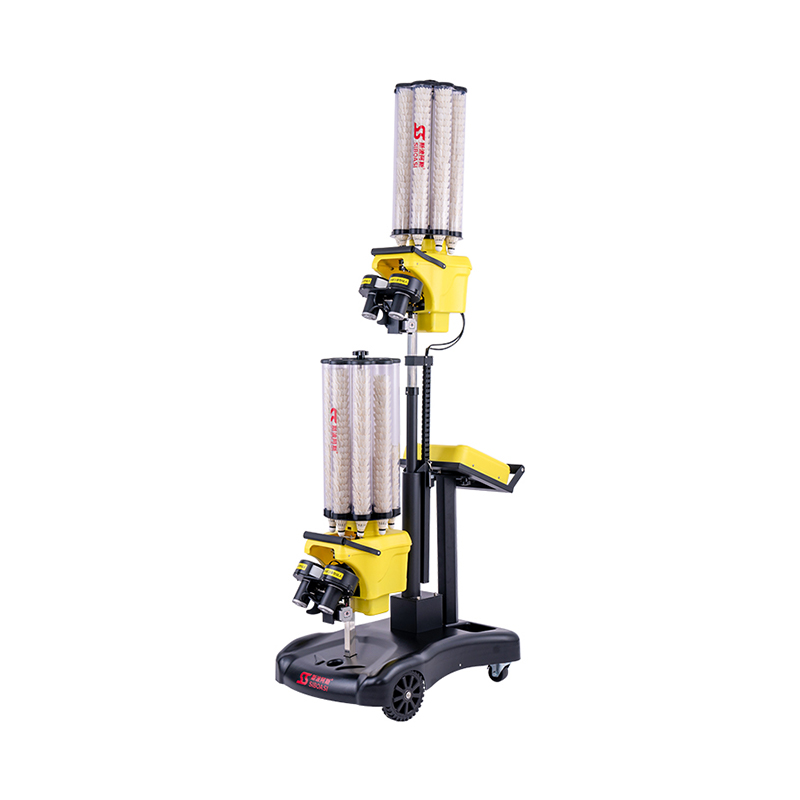
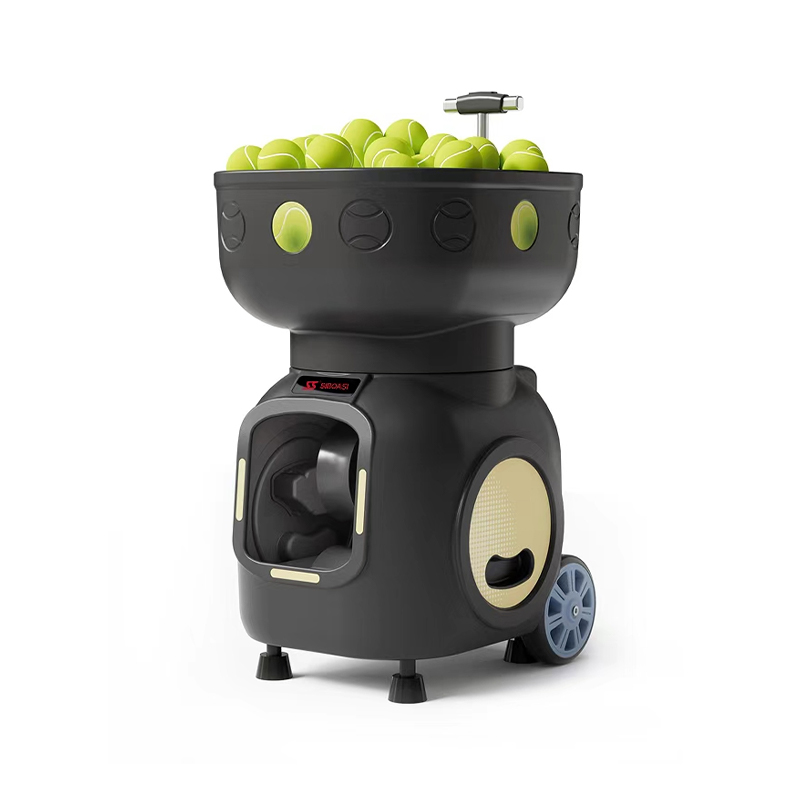
You can practice almost everything in tennis on your own, footwork, fitness, and serve toss, except the one thing that matters most: getting the ball back to you in a repeatable, controlled way. A hitting partner can help, but partners have schedules, moods, and shot preferences of their own. A tennis ball feeder machine removes that variable by delivering the same toss height, pace, and spin on demand, which makes it one of the most direct ways to turn court time into deliberate repetition.
The short version for buyers: choose a feeder machine based on your training goals first, then consider where you play, how you transport it, and what you want to spend. If you need simple, consistent basics, a single-speed machine is enough. If you want to place shots at specific landing zones or simulate match patterns, a programmable machine is the better investment.
What a Tennis Ball Feeder Machine Does
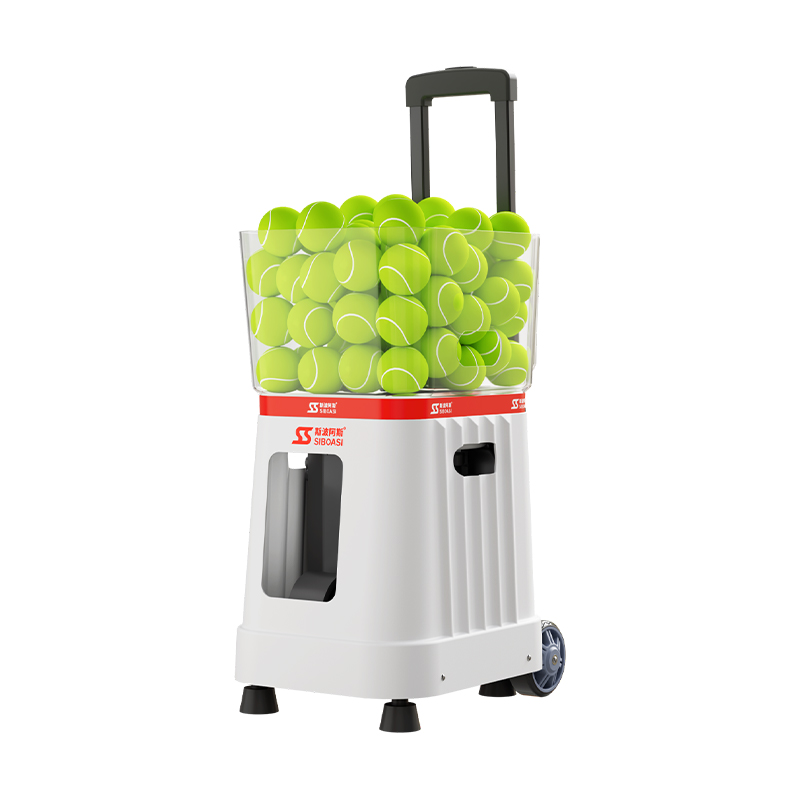
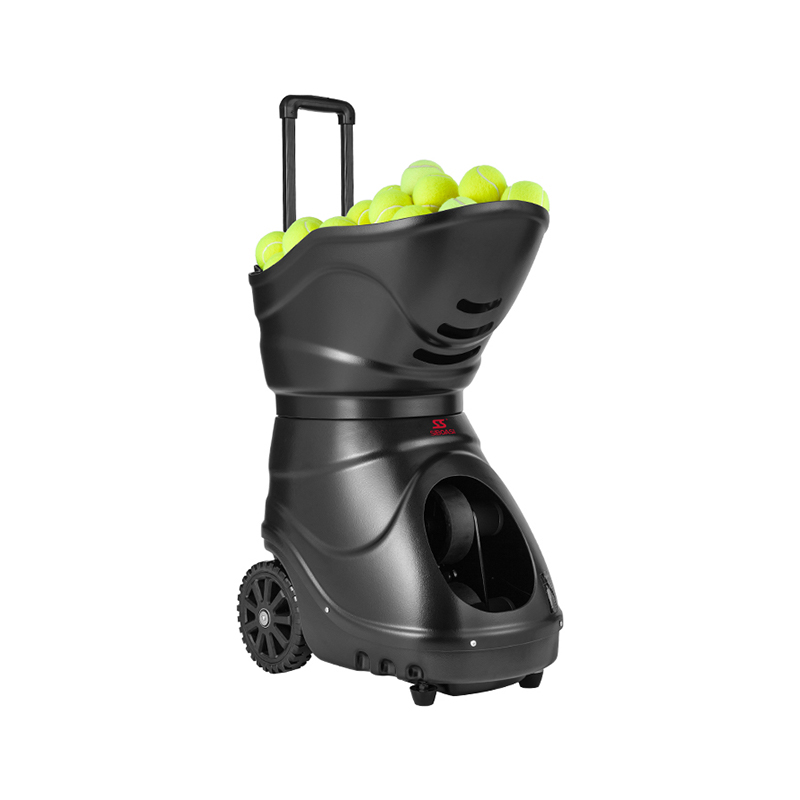
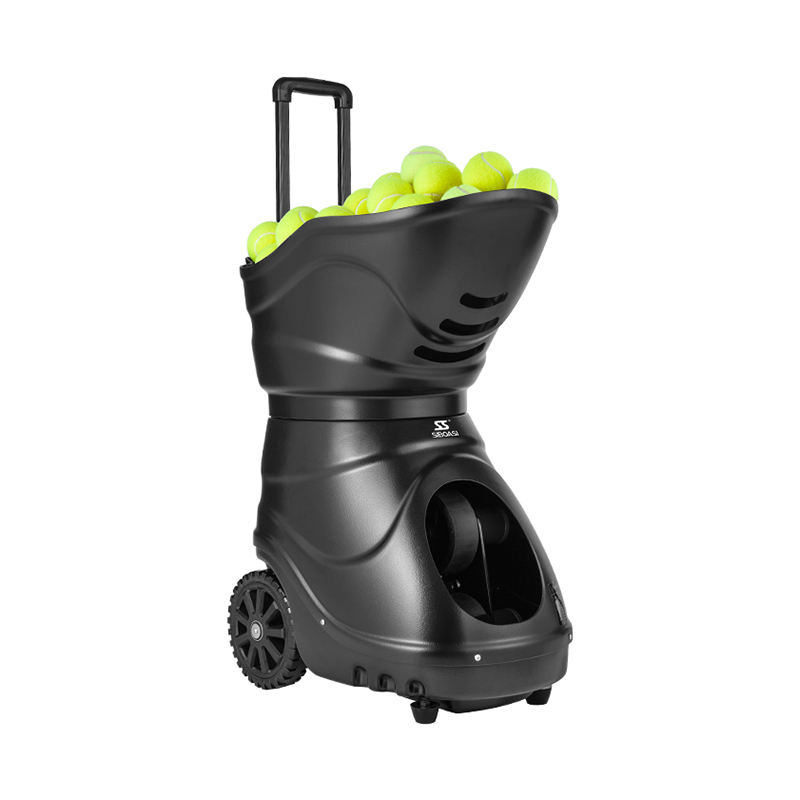
A tennis ball feeder machine, also called a tennis ball throwing machine or serving machine, collects balls from its hopper and launches them toward a target location at a chosen pace. Modern machines let you adjust several basic parameters:
- Speed — from gentle practice lobs to flat, fast drives for reaction work.
- Feeding interval — how long between each ball, typically 2 to 8 seconds.
- Oscillation — fixed position, sweeping side-to-side, or programmed patterns.
- Elevation — vertical angle to force low or deep contact points.
Higher-end models add landing zone programming, meaning you can pre-set exactly where each ball lands. That turns a feeder from a simple repetition tool into a drill partner. Siboasi's tennis ball machines, for example, offer between 4 and 35 landing zones depending on the model.
Key Specifications to Compare Before Buying
Feeder machines look similar at a glance, but the specifications underneath determine how useful the machine will be after the first few weeks. Look at the following areas first.
Speed Range and Elevation Control
Speed range tells you how powerful the machine can be and how subtle its low-speed control is. Beginners need enough range to keep balls slow and deep; advanced players need top speeds that force quick preparation at the baseline. Elevation control is at least as important as speed because it changes the depth and arc of the feed.
Oscillation and Landing Zone Programming
Oscillation moves the feed side to side so you can practice moving to the ball. A fixed feed works for grooving one stroke; sweep oscillation works for forehand-to-backhand transitions. Landing zone programming takes this further: you can create a sequence of balls that land where a coach would normally place them, such as a cross-court forehand followed by a short ball.
Ball Capacity and Battery
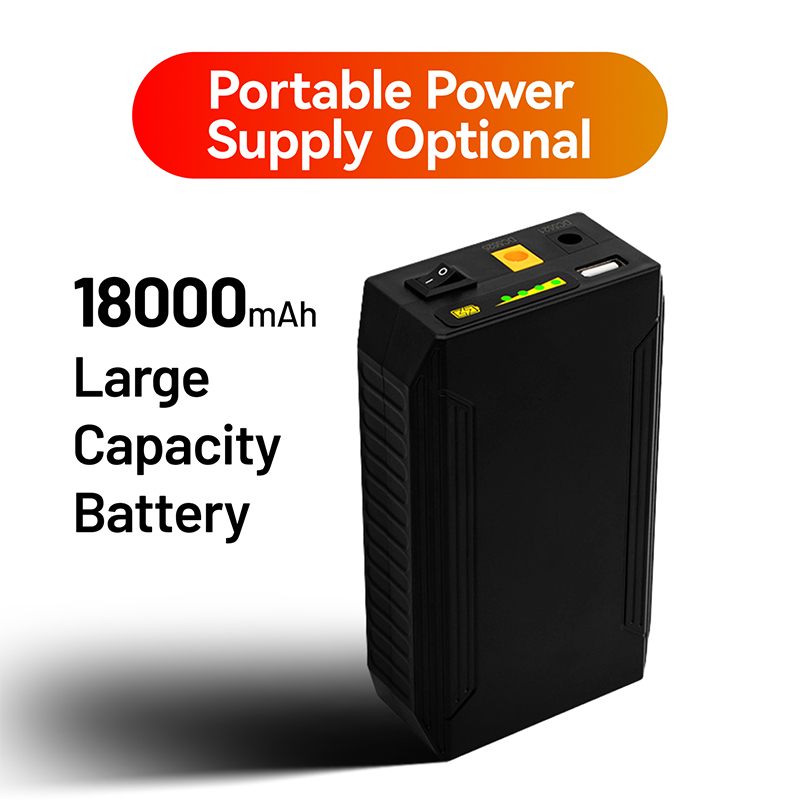
Capacity affects session length. A 70-ball hopper runs out before you can complete a full drill set; a 150-ball hopper lets you focus on strokes instead of chasing balls. Built-in batteries add weight but allow practice on public courts where power outlets are unavailable.
Control Method
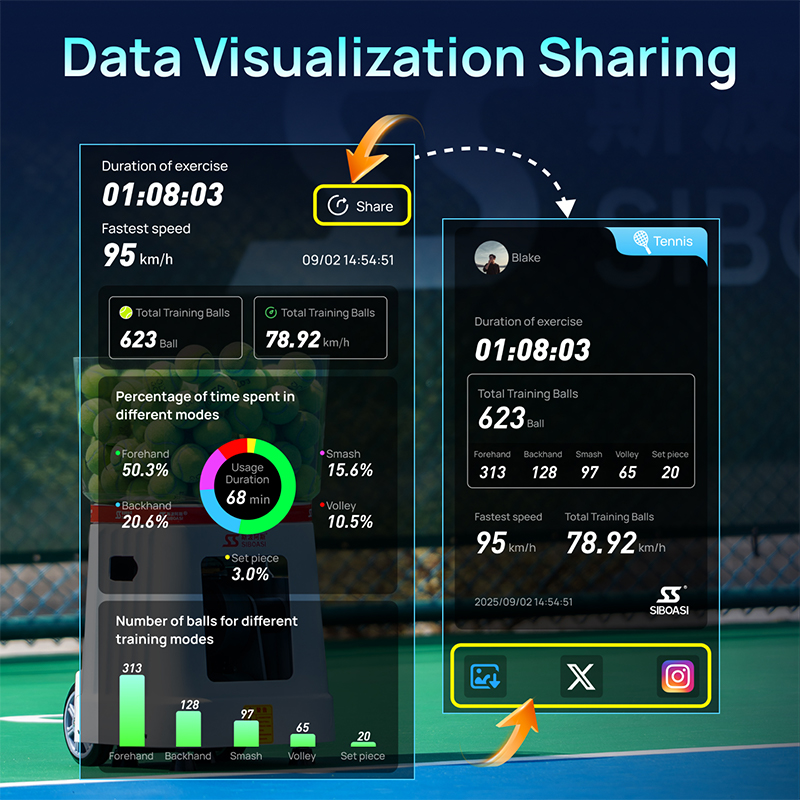
Basic machines use a wired or handheld remote. App-operated machines allow spreadsheet-style programming of sequences and speed changes mid-session. Voice control is becoming common on premium feeders such as the Siboasi T7 Pro, letting you adjust settings without interrupting your practice position.
A quick comparison of typical specifications across machine tiers.
| Feature |
Entry-level |
Advanced / Programmable |
| Speed control |
Single or few speeds |
Multi-speed with fine adjustment |
| Delivery pattern |
Fixed or simple sweep |
Multiple cross drills and programmed landing zones |
| Ball capacity |
70–100 balls |
120–150 balls |
| Control |
Manual or remote |
App, remote, and voice options |
| Battery |
Optional or absent |
Built-in rechargeable battery |
That table is a simplification, but it shows the typical trade-off with a tennis ball feeder machine: price increases with programming flexibility and automation.
Match the Machine to Your Playing Level
Buying a feeder that is several levels above your current game is wasteful; buying one that cannot grow with you is equally frustrating. Match the machine to how you will actually use it.
Beginners: Build a Reliable Foundation
If you are new to tennis, the priority is a machine that throws a consistent, forgiving ball so you can repeat your contact point and build rhythm. A single-speed machine keeps things simple and affordable. The beginner-friendly T1 tennis ball machine is a good example: it has one basic speed, a straightforward controller, and a durable design for steady practice sessions.
 T1 Tennis Ball Machine Beginner Basic Single-Speed Model Suppliers, Factory - SiSiboasi is T1 Tennis Ball Machine Beginner Basic Single-Speed Model Suppliers and Factory in China, Wholesale T1 Tennis Ball Machine Begi...View Product →
Intermediate Players: Add Programs and Precision
Once your strokes are stable, you need variability. A programmable feeder lets you build forehand-backhand sequences, work on wide angles, and simulate the rhythm of a real rally. A machine with multiple landing zones, such as the 21-zone programmable T2202A tennis ball machine, gives you a drill library that would otherwise require a coach for every session.
 T2202A 21-Zone Precision Drill Programming APP-Enabled Tennis Ball Machine SupplSiboasi is T2202A 21-Zone Precision Drill Programming APP-Enabled Tennis Ball Machine Suppliers and Factory in China, Wholesale T2202A 21...View Product →
Advanced and Team Players: Simulate Match Conditions
At the competitive level, repetition alone is no longer enough. You need sequences that mimic opponents, fast alternation between short and deep balls, and the ability to switch patterns instantly. Premium feeders add app and voice control so a coach or player can change tactics mid-session. The T7 Pro voice-controlled tennis ball machine for team training is designed for exactly this: team drills, tournament preparation, and tactical practice with large ball capacity and voice-activated adjustments.
 T7Pro Voice-Control Tennis Ball Machine Professional Team & Tournament Tactical Siboasi is T7Pro Voice-Control Tennis Ball Machine Professional Team & Tournament Tactical Edition Suppliers and Factory in China, Wholes...View Product →
Feeder Machine vs. Hitting Partner
A feeder is not a replacement for match play, but it is usually a much better training partner than a wall or an occasional practice friend. Here is a practical comparison:
- Consistency: a machine repeats the same delivery hundreds of times; humans get tired and vary their feeds.
- Availability: a machine is available whenever the court is; partners need scheduling and often cancel.
- Drill design: programmable machines execute a sequence exactly; coaches can vary the sequence but at a higher hourly cost.
- Live play: humans read your shots and react; no feeder can do that yet.
Most serious players end up using both: a feeder for volume and structured repetition, and a human partner for points and tactical sparring.
Choose the Machine for Your Court and Routine
Where and how you train should influence the model as much as your level does.
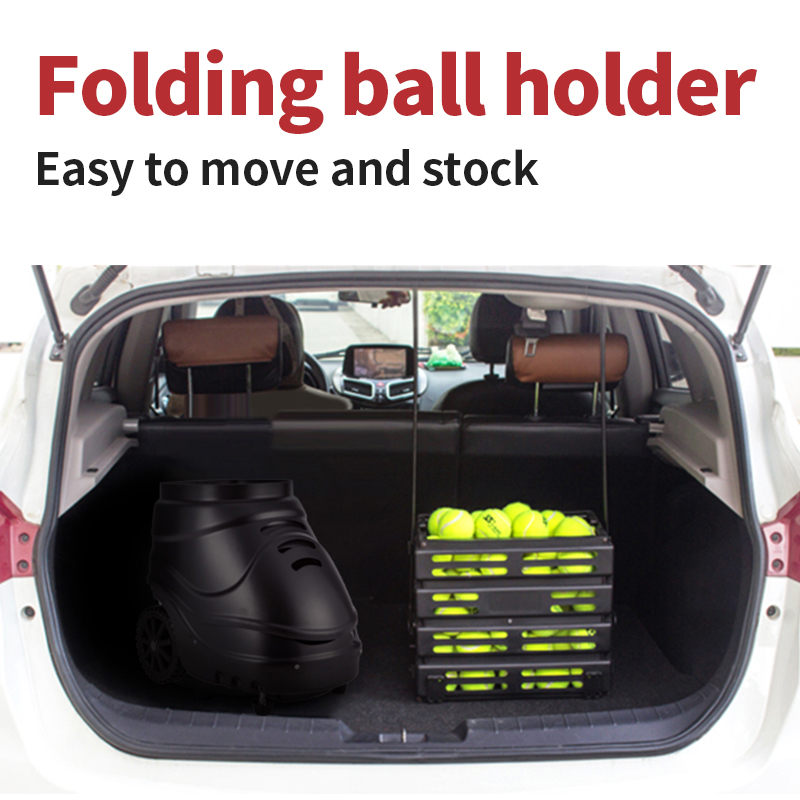
For players whose court time is mostly solo and casual, a compact machine that fits into a trunk and runs on a built-in battery is the practical choice. Siboasi's home training solutions focus on exactly this: smaller hoppers, lighter chassis, and easy remote controls.
For clubs, academies, and community courts that run lessons all day, feeding speed, durability, and large capacity matter more than portability. Commercial venues typically need machines that can withstand many hours of daily use and hold enough balls for group classes.
If you are still deciding between levels of automation, a detailed guide on how to choose the right intelligent tennis ball machine explains the differences between manual, remote, and app-based control in real training situations.
Practical Buying Considerations
A few details that are easy to overlook until the machine is in front of you:
- Ball compatibility: pressureless balls last longer in a feeder; standard pressurized balls are fine but wear faster.
- Noise: motor-driven wheels are audible. If the court is near residential areas, check the sound level or ask before buying.
- Transport and storage: a 70-ball machine weighs less than a 150-ball model. Measure your trunk and storage space first.
- Support and warranty: feeder machines have moving parts and electronics. A manufacturer with direct service support matters over the long run. Siboasi's factory-direct operation covers more than 150 countries, so after-sales service and spare parts are easier to access.
- Extras that matter: extra batteries, ball hoppers, and carry bags add cost but also extend the machine's useful life.
Final Recommendation
Buy the least expensive machine that still covers your training goal. If you are a beginner on a budget, choose a basic single-speed feeder and spend the savings on court time. If you already play league matches or coach others, invest in a programmable model with multiple landing zones and app control; the extra cost shows up directly as more productive sessions.
Regardless of the model, a tennis ball feeder machine pays for itself once you realize how many quality repetitions you can get in an hour with no partner and no coach. Define your drills, check the specifications that matter, and choose the machine that fits your routine.


 Español
 عربى
عربى