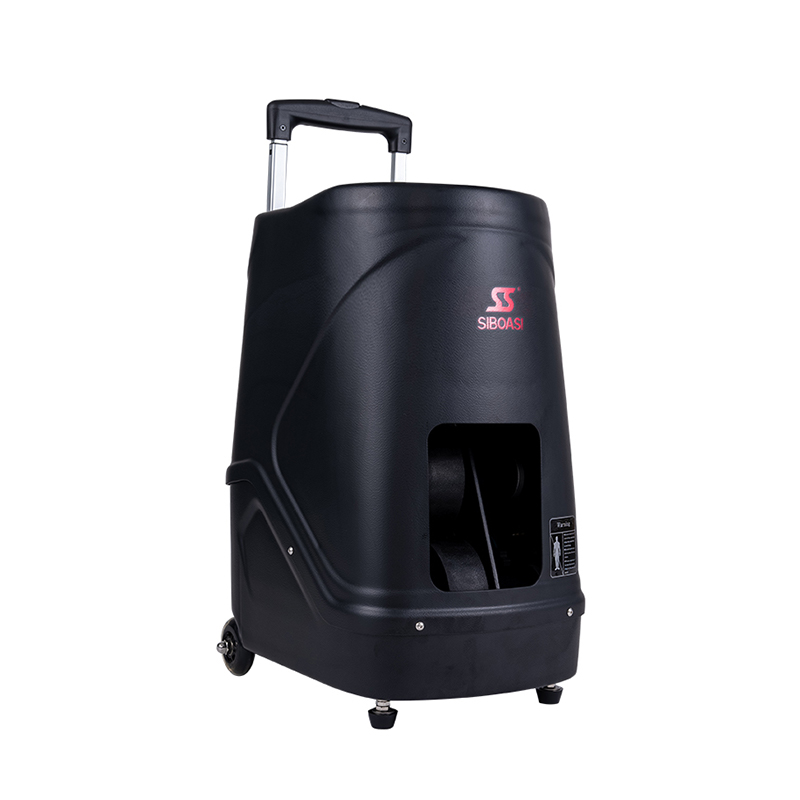
Picture this: you set up a machine, hit fifty forehands in ten minutes, and never wait for a partner to return balls. That is the promise of a tennis throwing machine - consistent, repeatable feeds that let you focus on technique. After testing units in clubs, schools, and home settings, the conclusion is straightforward: a ball machine earns its place if you want more swings per session and you match the specs to your level. The right choice depends on capacity, speed range, spin adjustment, and how much programming you need.
Is a Tennis Throwing Machine Worth the Investment?
Most players overestimate the cost of a decent machine and underestimate how many repetitions they miss. A typical hour with a partner gives you maybe 200 swings. A machine delivers 600 to 900 balls in the same time, with identical trajectory on every feed. That builds muscle memory faster.
Buying a machine is not worth it if you are still developing basic form with a coach, because feedback matters more than volume at that stage. But if you have established technique and want to sharpen timing and footwork, the return on investment is clear. A throwing machine does not replace match play, but it fills the gap with high-quality repetition.
- Train at any time without coordinating with a partner.
- Repeat the same shot until your body owns the pattern.
- Adjust speed and spin to target a weakness.
- Turn wasted downtime into active swings.
How a Tennis Throwing Machine Works
Tennis ball machines are simpler than the price tags suggest. Most use two counter-rotating wheels that grip and accelerate the ball. Wheel speed determines ball velocity; the difference between the top and bottom wheels creates spin. One-wheel designs are cheaper but limited to flat feeds. Two-wheel and three-wheel units give you topspin, backspin, and a more realistic trajectory. The oscillator moves the head or an internal guide to change lateral placement. Entry-level machines swing in a fixed one-line or two-line pattern. Advanced units let you program shot sequences to specific zones.
Speed and Spin Matter More Than Maximum Power
Speed ratings are in km/h. Entry-level machines reach 50-70 km/h, enough for a beginner returning groundstrokes. Intermediate machines go up to 100-130 km/h. Professional units can fire at 140 km/h or more. Spin adjustment matters more than raw speed for advanced training, because topspin changes the bounce height and forces you to adjust your contact point.
Oscillation Patterns and Drill Programming
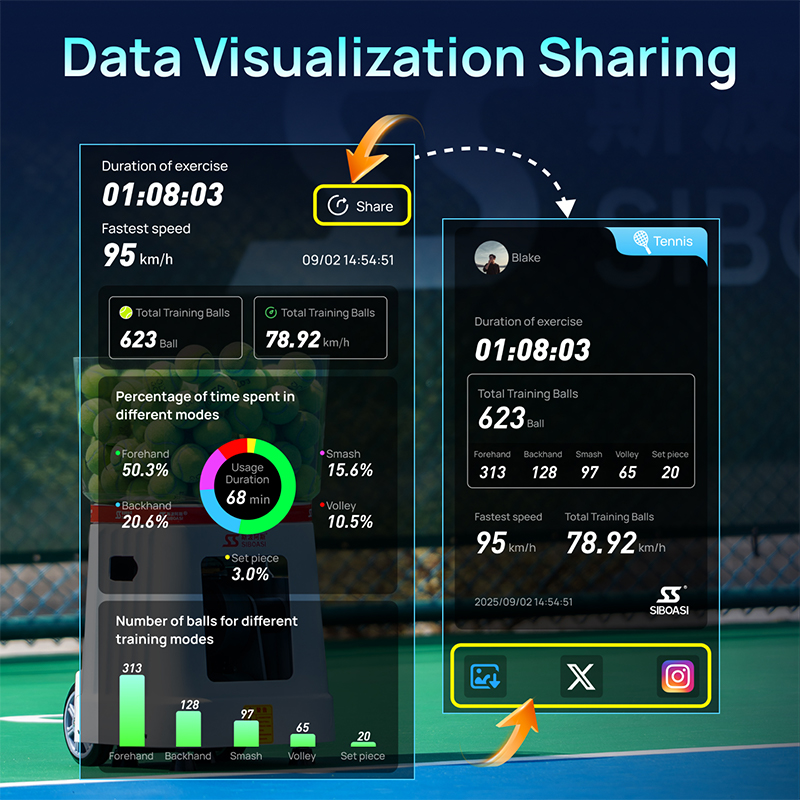
Fixed mode sends every ball to the same spot, ideal for grooving a forehand. Two-line mode alternates left and right. Random mode mimics a rally by moving across the court. The most useful upgrade is drill programming: you can design a sequence such as two forehands wide, one down the middle, then a backhand approach. Some machines pair with an app or remote to switch drills without walking back to the unit.
Key Specifications to Compare Before Buying
Before you buy, lay the specifications side by side. The table below shows the five numbers that matter most.
Key specifications to compare when choosing a tennis ball machine.
| Specification |
Typical Range |
Why It Matters |
| Ball capacity |
60-200 balls |
Longer sessions before refilling |
| Ball speed |
50-150 km/h |
Must match your level and court size |
| Spin types |
Flat / Topspin / Backspin |
Determines realistic ball behavior |
| Oscillation style |
Fixed / Random / Programmed |
Controls variety and drill complexity |
| Battery life |
2-6 hours |
Decides portability and court time |
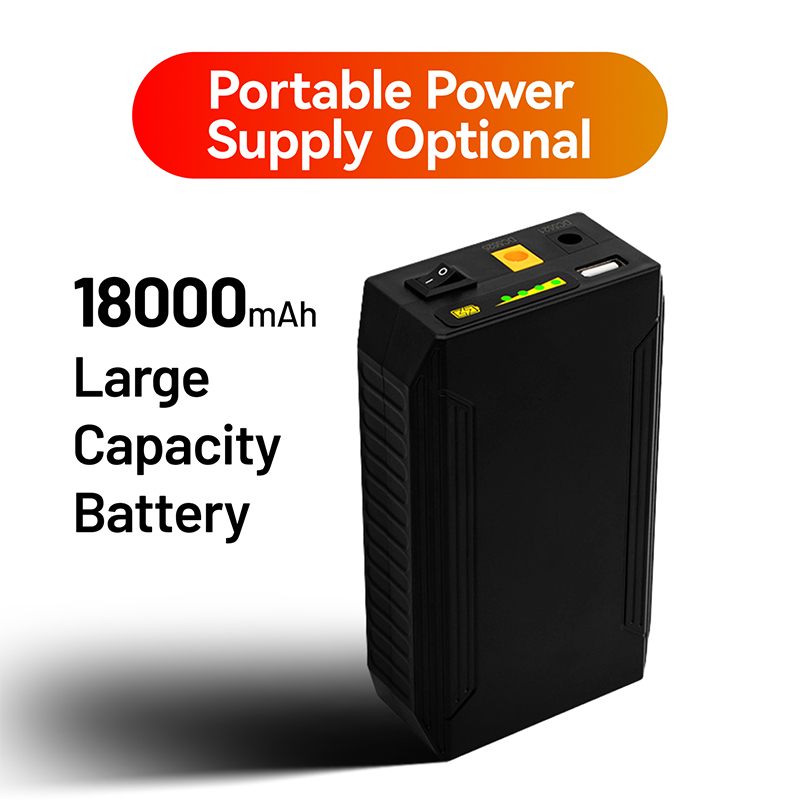
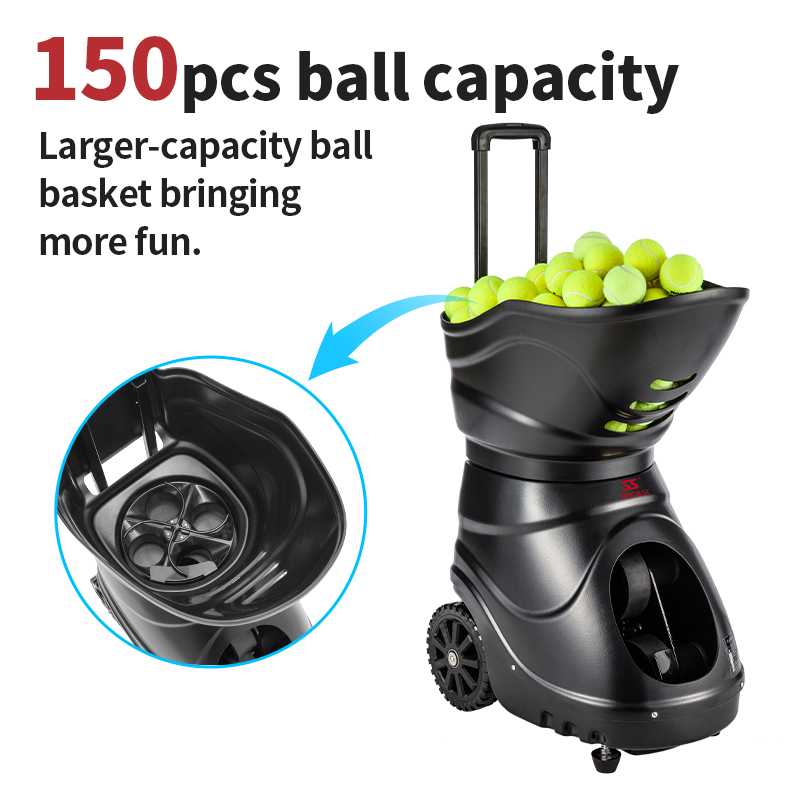
A capacity under 80 balls means frequent stops. If you practice at a public court with no nearby outlet, battery life matters as much as power. For home players, portability and weight are practical concerns; for coaches, programming flexibility and speed range are non-negotiable.
Price is another practical filter. Entry-level machines generally fall in the $400-$800 range, while professional models with app control and 35-zone programming can exceed $2,000. The extra cost buys consistency, spin accuracy, and drill automation, but only if you actually use those features. A mid-range machine with two-line oscillation and remote control covers most home players' needs.
- Check ball type compatibility: regular felt balls or pressureless balls.
- Confirm the unit's weight and whether it has a handle or wheel kit.
- Look for replaceable feed wheels and available spare parts.
- Verify remote range and whether the app requires a subscription.
Maintenance, Safety, and Setup
Regular maintenance keeps a tennis throwing machine reliable. Wipe down the wheels after each use to remove dust and clay, because residue changes friction and makes ball speed inconsistent. Check the feed mechanism for jammed balls, especially when using softer practice balls. Store the unit indoors or under a cover, and charge the battery before it drops below 20 percent to extend its lifespan.
On safety, never stand directly behind the machine or look down the feed chute while it is armed; launch force can cause injury. Most machines have a clear safety switch or dead-man switch on the remote. Test it before each session. Proper setup also improves performance: place the machine behind the baseline facing the target area, and adjust the tilt angle to control trajectory. Use the included height guide or a simple marker to verify ball depth.
Choosing the Right Machine for Your Training Context
The best tennis throwing machine depends on who will use it and where. Our solutions pages break this down further, but here is the practical summary.
Home Training and Solo Practice
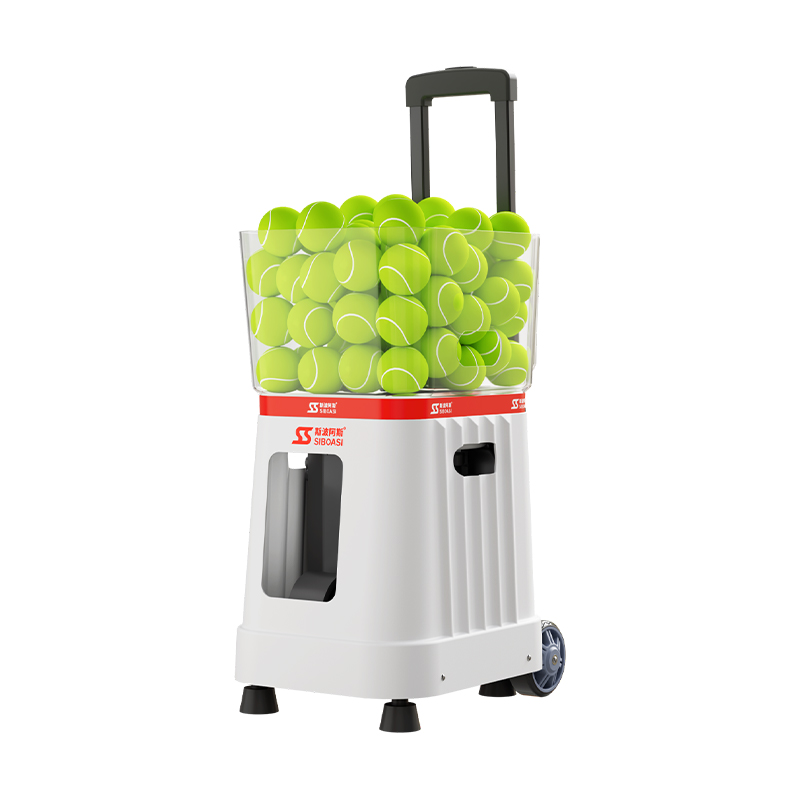
For a player practicing alone at a club or local court, a lighter machine with an internal battery and remote control removes common friction points. You do not want to drag a 25 kg unit across the parking lot or climb under the net to change settings. Home users benefit from simple oscillation and at least a 100-ball capacity. For a detailed setup plan, see our home training guide.
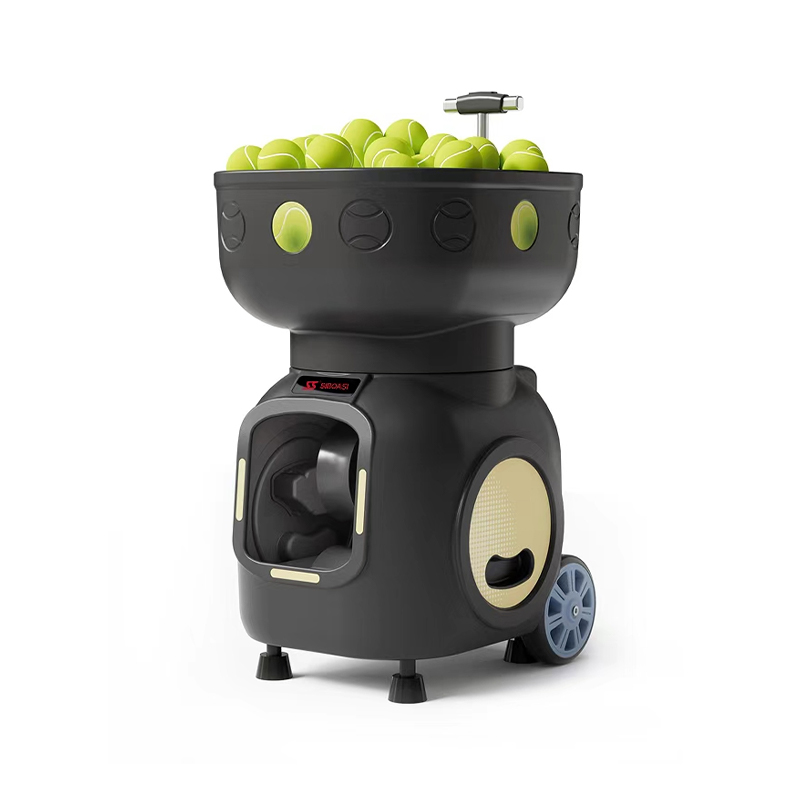
 T1 Single-Speed Tennis Ball Machine for Beginner Solo PracticeThis fixed-speed machine suits beginners training alone. Its simple controls and portable design remove setup hassle, letting new players focus on consistent stroke mechanics without adjustable settings.View Product →
Coaching, Clubs, and Professional Training
Coaches need speed range, spin variety, and the ability to program sequences. A machine that can send a ball wide, pull you out of position, then follow with a short ball is more valuable than one with a higher top speed. Programmable machines reduce physical workload and let one coach manage multiple players. Teams may also want voice control or app-based drill management for fast adjustment between sessions. Professionals evaluating multi-player workflows can check our professional training solutions page.
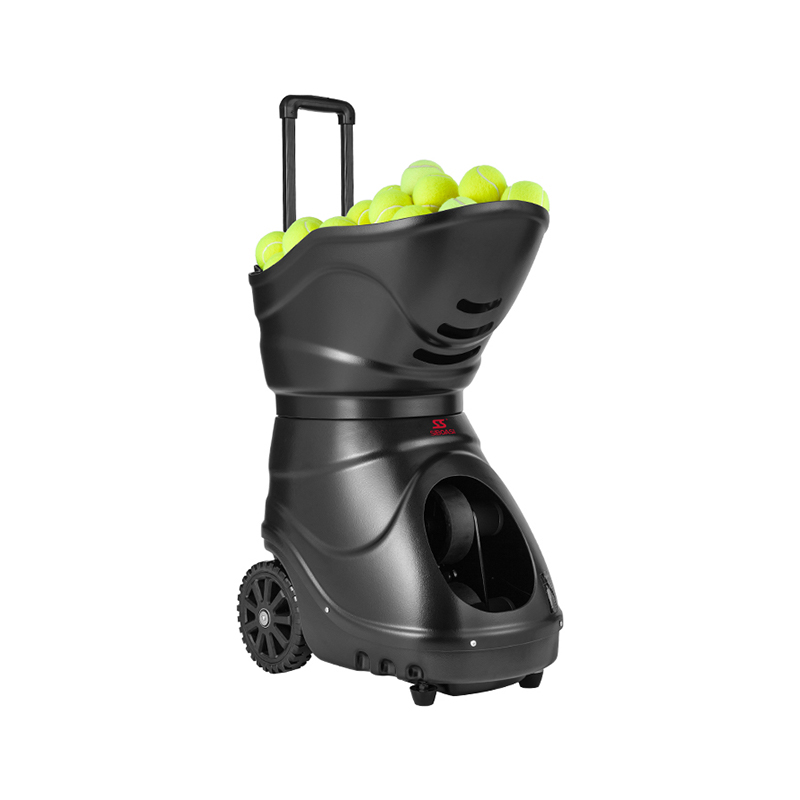
 T7Pro Voice-Control Tennis Ball Machine for Team Tactical DrillsDesigned for professional teams, it replicates match conditions with adjustable speed, spin, and trajectory. Voice control and multi-ball sequences support hands-free, multi-player tactical training sessions.View Product →
Schools and Commercial Venues
For schools, durability and ease of use are top priorities. Venues often run machines all day, so they favor high-capacity units and quick-access controls. Commercial operators should compare service requirements and power options before committing to a model. A program with six cross drills and 35 landing zones gives venues enough variety to serve different skill levels.
 S4015A Smart Tennis Machine with 35-Zone Precision ProgrammingWith 35 programmable landing zones, six cross-drill modes, and app control, this unit offers detailed drill customization for advanced players and coaching facilities seeking varied, repeatable training.View Product →
The right tennis throwing machine does not have to be the most expensive one on the shelf. Start with your training frequency, your court situation, and the two or three drills you will run most often. Then match those needs against capacity, speed, spin, and programming. A basic machine with consistent delivery is better than a complex unit you never learn to use. If you know exactly which gap you are filling, the decision writes itself.



 Español
 عربى
عربى